

23 March 2026
Advancing periodontal health together: interview with the EFP president
Categories:Communication, Institutional
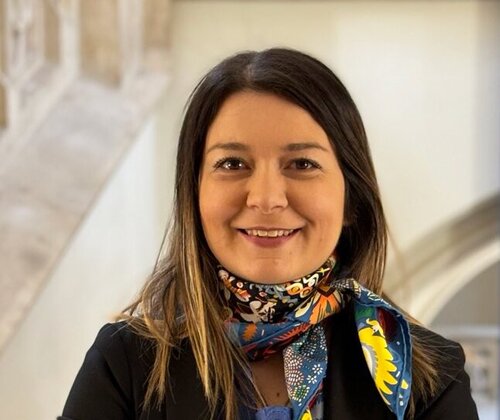
As she begins her term as president of the European Federation of Periodontology, Mia Rakić reflects on the priorities shaping the federation’s work in a rapidly changing world. From strengthening collaboration among national societies and advancing recognition of periodontology as a specialty, to harnessing emerging technologies and promoting sustainable care, she shares her vision for supporting the periodontal community and improving oral and overall health.
Q: As you take on the role of EFP President, what will be your top priorities for the coming year?
Mia Rakić: We are living in a very unpredictable and unsettled world. In such circumstances, the responsibility of a large organization like the EFP becomes even greater. The federation brings together many national societies and professionals across Europe and beyond, and while we are a scientific and healthcare organization, global developments inevitably affect healthcare, education, and professional life.
The EFP has a very ambitious strategic plan, and the current uncertainty challenges us to remain flexible. A good example was Perio Master Clinic in Baku with the challenging situation happening only few days before the congress. This imposed a formidable challenge on the organizing committee and the EFP board, requiring permanent screening, adaptation and brave decision-making with extraordinary responsibility. Thanks to the unconditional dedication and coordinated action between congress chair Professor Cavid Ahmedbeyli, Professor Mariano Sanz and the EFP board, Perio Master Clinic was held successfully. This was a powerful demonstration of the EFP strength, driven by excellence, determination and solidarity. As the EFP president I want to express my sincere gratitude to the team, and also to all attendees for their trust.
This experience demonstrated the determination and resilience of our community. Moving forward, we will continue to monitor developments closely, adapt where needed, and support our colleagues and healthcare professionals, particularly in regions affected by global events. It is important to stress that the EFP does not take political positions; our role is to support the periodontal and wider healthcare community.
Q: Recent developments in Spain have brought renewed attention to the recognition of periodontology as a specialty. How can the EFP support national societies where recognition is still evolving?
MR: Recognition of periodontology as a specialty has long been a key priority for the EFP because it ultimately serves patients, colleagues, and healthcare systems.
However, the regulatory landscape in Europe is complex. Each country has its own legal and professional framework, alongside European regulations. While the EFP provides guidance, advocacy, and statements at the European level, much of the work must happen nationally.
Some countries already recognize periodontology as a specialty, and their experience can provide valuable support for others working toward recognition. Spain is currently seeing significant progress after many years of effort. The Spanish Society of Periodontology (SEPA) and other dental organizations have played a major role in advancing this process, and their experience may inspire similar efforts elsewhere.
Q: Periodontal diseases remain highly prevalent yet under-recognized in health policy. How can the EFP elevate gum health on European and global health agendas?
MR: Raising awareness of periodontal health has always been a core priority of the EFP. It is a complex task because it requires collaboration across many levels: within dentistry, with other healthcare professions, and with policymakers and public health authorities.
The federation addresses this through education, public awareness initiatives such as Gum Health Day, and collaboration with the medical community. Workshops with other medical societies help strengthen the links between dentistry and medicine.
Another key contribution is the development of scientific recommendations, guidelines, and consensus reports. These help organize the available evidence and make it easier for clinicians and policymakers to understand and apply it.
Ultimately, the message is simple but powerful: oral health has a direct impact on overall health. Preventing periodontal disease and ensuring appropriate treatment benefits patients, healthcare systems, and society. The key now is perseverance.
Q: How do you see the EFP strengthening its role as a platform for advancing science, education, and patient care?
MR: The EFP strategic plan provides the framework for our work, but implementing it requires strong collaboration among national societies.
One of my priorities is to establish a European scientific network within the EFP. This platform would strengthen the connections between individual researchers, national societies, and EFP committees.
Through regular dialogue with national societies, we can better understand their needs and challenges and communicate these to the relevant committees. This will help us prioritize actions and address them effectively.
At the same time, the platform would support national societies in aligning their activities with the EFP strategic plan. Ultimately, it would help guide the development of periodontology in Europe based on real needs.
Another important objective is to build a structured scientific network capable of conducting coordinated epidemiological and surveillance studies in Europe. Strengthening the evidence base in this way would also reinforce our advocacy efforts with organizations such as the European Commission and the World Health Organization.
Q: Collaboration is central to the EFP’s work. How do you plan to deepen partnerships within the periodontal community and beyond?
MR: My overall approach is to harness the full potential of our community.
When I first became involved in EFP leadership, one of my responsibilities was Gum Health Day, which included engaging younger generations. I strongly believe that young professionals will play a crucial role in the future of periodontology.
During my presidency, I would like to explore ways to involve them more directly in collaborations with medical societies. Younger professionals are often particularly effective at communicating complex information to diverse audiences, including healthcare professionals, policymakers, and patients.
They can also play an important role in prevention initiatives and public health outreach. This may not yet become a fully structured programme during my term, but it is an area I care deeply about.
Q: In a rapidly evolving environment shaped by digital innovation and AI, how should the federation approach new technologies while safeguarding scientific rigour?
MR: Digital technologies and artificial intelligence have enormous potential to improve many aspects of healthcare. However, the role of the EFP is to carefully assess both their opportunities and limitations.
Artificial intelligence can analyse large datasets and detect patterns with remarkable speed, which may be particularly useful in areas such as diagnostics, where multiple variables interact.
These technologies may also support diagnostic workflow, surgical planning and other clinical stages. But it is essential to understand the core principles of this approach and to recognize their limits. They should assist clinicians, scientists, and educators, not replace critical reasoning.
The final judgement must always remain with the clinician, researcher, or teacher. Educational initiatives, such as webinars and explanatory materials to help periodontal professionals understand how these technologies work and how to use them responsibly will be released by EFP in the coming months.
Q: Environmental sustainability is becoming a priority in healthcare. What role can periodontology play in sustainable dentistry?
MR: For me, the most sustainable approach in dentistry is very simple: preserving healthy natural teeth. Periodontology is, by definition, the most sustainable branch of dentistry as periodontists investing their knowledge and skills to preserving teeth over the long term. We should not forget this core principle of periodontology.
Sustainable periodontology focuses on two main priorities: promoting good oral hygiene across the population and reinforcing the importance of preserving natural teeth within the dental community, exhausting every possible option before considering their replacement.
At the same time, good oral health contributes to better overall health, indirectly reducing the burden on healthcare systems.
Q: As a young woman leading the EFP, what does leadership mean to you today?
MR: I am proud to lead a federation that has long been committed to diversity and inclusion. The EFP actively promotes gender balance and encourages the involvement of younger generations across its activities, from workshops to major congresses such as EuroPerio and the Perio Master Clinic.
Personally, it is a great honour to serve as president. I am also the youngest president in the federation’s history, which reflects the EFP’s commitment to equal opportunities.
Q: What message would you like to share with EFP members and the wider oral health community?
MR: I am very proud of the large and vibrant family that makes up the EFP.
Over the years, I have witnessed the remarkable progress achieved thanks to the dedication of our member societies. During my presidency, I will do my best to strengthen the connections between the federation and national societies so that we can continue building on our shared achievements and celebrating our successes together.
Sign up for our newsletter
The EFP publishes a free monthtly email newsletter with the latest news about the federation's activities, its publications, and its campaigns.
EFP partners









Sign up to our newsletter
The EFP publishes a free monthtly email newsletter with the latest news about the federation's activities, its publications, and its campaigns.
