

7 November 2026
Czech Perio Society brings together experts for Perio Days
Categories:Education, National Activities
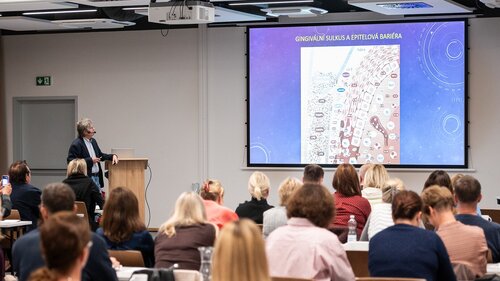
The Czech Perio Society held its autumn Perio Days on 9 and 10 October 2026 in Lipno. The two-day meeting brought together dentists and periodontologists for a scientific programme exploring advances in periodontal treatment, interdisciplinary care, oral health risks and infection prevention.
The meeting featured seven presentations by Czech and international experts, combining clinical experience, emerging research and practical recommendations for everyday dental practice.
Advances in periodontal treatment
Opening the Friday programme, Dr Alberto Fonzar (Italy) reviewed 35 years of progress in periodontal therapy, drawing on EFP recommendations and his clinical experience. Focusing particularly on stage IV, grade C periodontitis, he addressed tooth mobility, secondary occlusal trauma, pathological tooth migration and the need for prosthetic rehabilitation.
Through clinical cases, he compared resective and regenerative surgical approaches, discussed the management of intrabony defects and furcations, and emphasized the importance of soft-tissue management, long-term stability and aesthetic outcomes. He also highlighted the risks associated with smoking and implant treatment in patients with a history of aggressive periodontitis.
Professor Gabriella Dvorak (Austria) explored the complex interaction between modifiable and non-modifiable factors influencing periodontal health, including genetics, immunity, age, hormones, medication and lifestyle.
Advocating a holistic, interdisciplinary approach to diagnosis and treatment, she discussed the roles of oral mucosal immunity, hormonal changes, pregnancy, nutrition and tobacco use. Particular attention was given to the oral microbiome and the importance of maintaining microbial balance rather than attempting to create a sterile oral environment. She also cautioned against prolonged chlorhexidine mouthwash use because of its potential effects on the microbiome.
From regenerative medicine to clinical challenges
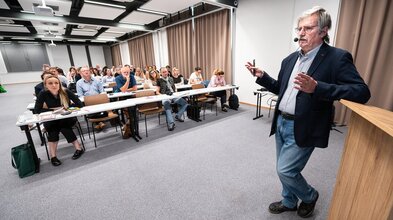
Saturday's programme opened with Dr Ladislav Záruba (Česká Lípa) discussing recurrent aphthous ulcers, particularly major aphthae. He reviewed their clinical presentation, possible causes and treatment options, including conventional vitamin supplementation and the potential use of inosine pranobex. Presenting encouraging clinical observations, he stressed that further research is needed to establish the effectiveness and safety of this approach.
Dr Pavel Poleník (Plzeň) traced 50 years of progress in advanced periodontal therapy, from traditional resective techniques to biologically driven regenerative strategies. His presentation explored the potential of periodontal stem cells and their secretome, including immunomodulatory, anti-inflammatory and tissue-regenerative properties. He also discussed immune homeostasis, coordinated periodontal tissue regeneration and emerging applications of multispectral laser therapy.
Dr Jana Vašáková (Prague) addressed mucogingival surgery and frenulum management in children. Emphasising that paediatric patients require a distinct clinical approach, she explained how frenulum attachment changes during growth and why surgical intervention is not always necessary. Her presentation also covered gingival recession associated with orthodontic treatment, lingual frenulum abnormalities and ankyloglossia.
Tobacco, oral health and infection prevention
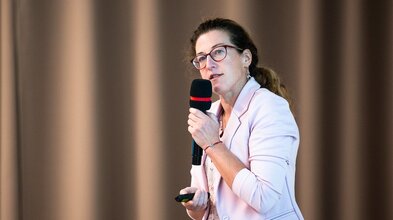
Dr Markéta Janovská (Prague) examined the oral health implications of nicotine consumption, comparing conventional and heated tobacco products, electronic cigarettes and nicotine pouches. She discussed their potential association with oral mucosal changes, including leukoplakia and precancerous lesions, and offered practical guidance on communicating with patients about nicotine dependence, smoking cessation and referral to specialist support services.
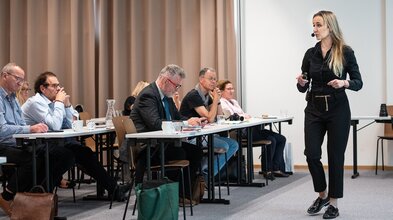
Concluding the scientific programme, Dr Barbora Králíčková (Department of infectious diseases, Bulovka Hospital, Prague) reviewed viral hepatitis A, B, C, D and E, with particular attention to transmission, prevention and infection control in dental settings. She emphasized the importance of hepatitis B vaccination for dental professionals, rigorous hand hygiene and consistent infection control measures to minimize the risk of transmission. Dental teams should apply standard infection prevention precautions to all patients, regardless of their known infection status.
Continuing professional exchange
The meeting was characterized by high-quality scientific presentations and enthusiastic audience engagement, reflecting the Czech Perio Society's commitment to continuing education and professional exchange.
The next Perio Days will take place on 21–22 May 2027 in Třebíč, in the Czech Highlands. The autumn meeting is scheduled for 22–23 October 2027 in Brno. The scientific programmes are currently being developed.
Report based on information provided by Dr Michal Kania, Scientific Secretary of the Czech Perio Society.
Sign up for our newsletter
The EFP publishes a free monthtly email newsletter with the latest news about the federation's activities, its publications, and its campaigns.
EFP partners







Sign up to our newsletter
The EFP publishes a free monthly email newsletter with the latest news about the federation's activities, its publications, and its campaigns.
