

3 December 2025
EFP Probe: new integrated tool for periodontal assessment
Categories:Clinical Practice, Sponsored
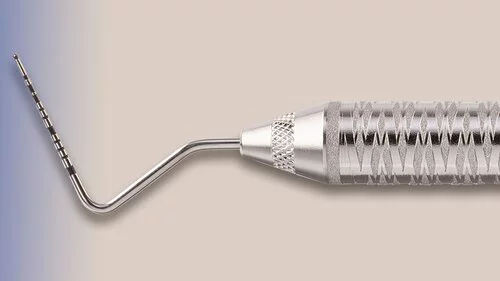
The European Federation of Periodontology is pleased to announce the EFP Probe, a new diagnostic instrument designed to bring screening and treatment functions together in a single tool. The EFP Probe was developed in collaboration with HuFriedyGroup to align with the current periodontal classification and the EFP’s clinical practice guidelines, making diagnostic decisions more consistent and straightforward for clinicians.
For decades, periodontal assessments have required two different instruments: a screening probe (typically based on thresholds established in the early 1980s) and a treatment probe for millimetre-level measurements. As Professor Moritz Kebschull, past EFP president, explains, the limitations of this approach became increasingly clear as classifications and guidelines evolved: "We are now using diagnostic thresholds that differ from those defined more than 40 years ago," he notes. "It seemed logical to develop a single probe that reflects today’s evidence and supports clinicians in applying the guidelines more intuitively."
The EFP Probe combines the WHO-style screening design with the widely used UNC 15, but adapts the band markings to 4mm and 6mm, consistent with the thresholds used in the current classification. This enables clinicians to identify, at a glance, whether a situation aligns with periodontal health, may require non-surgical therapy, or could indicate a need for surgical intervention.
In addition, the probe functions fully as a periodontal probe, with millimetre markings from 1mm to 15mm (excluding 2mm, which was removed following field testing). Its ball tip helps detect overhangs and plaque-retentive factors, features relevant at all stages of periodontal care.
"This instrument is essentially an improved UNC-15 combined with updated screening thresholds," explains Prof Kebschull. "It offers a practical way to integrate the classification and the guidelines into everyday practice."
After its launch at EuroPerio11, the EFP’s member societies and EFP-accredited programmes have begun introducing the probe and supporting dentists in its use. "By incorporating the EFP Probe into educational programmes, the EFP is helping to prepare professionals with innovative and evidence-based instruments, reflecting the EFP’s commitment to clinical excellence and education," said Kebschull. "Its cost is comparable to a standard probe, and replacing two separate instruments with a single tool may also offer practical advantages."
The introduction of the EFP Probe reflects an effort to support clinicians with tools that align more closely with contemporary evidence and diagnostic frameworks, while maintaining the familiarity and functionality of existing instruments.
Sign up for our newsletter
The EFP publishes a free monthtly email newsletter with the latest news about the federation's activities, its publications, and its campaigns.
EFP partners









Sign up to our newsletter
The EFP publishes a free monthtly email newsletter with the latest news about the federation's activities, its publications, and its campaigns.
