

24 November 2026
Management of gingival recessions: EFP workshop tackles key clinical decisions
Categories:Clinical Practice, Institutional
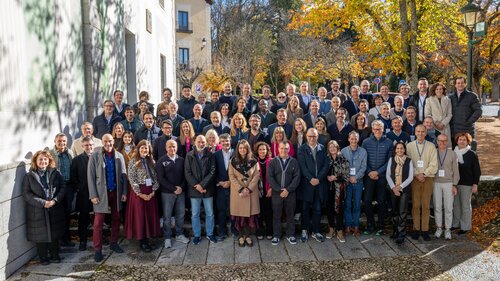
When should gingival recession be treated? Which surgical techniques offer the best outcomes? And what role should conservative treatments and adjunctive procedures play? These were among the key questions addressed at the 22nd European Workshop on Periodontology, held from 8 to 11 November 2026 in La Granja de San Ildefonso, near Segovia, Spain.
Organized by the EFP, Perio Workshop brought together leading international experts to develop an evidence-based clinical practice guideline for the management of gingival recessions, focusing specifically on buccal gingival recessions not associated with periodontitis.
Gingival recession is a common clinical finding that can affect aesthetics, may be associated with dentine hypersensitivity and non-carious cervical lesions, and raise concerns about long-term oral health. However, deciding whether treatment is necessary, and selecting the most appropriate intervention, can be challenging.
In clinical practice gingival recessions are sometimes managed by extending crowns or placing composite restorations up to the gingival margin, even when these approaches may not be appropriate. This highlights the need for a holistic, evidence-based approach that considers the underlying causes of recession, the patient's needs and the full range of available treatment options.
“Gingival recession is something dentists encounter every day, but its management is not always straightforward,” said Professor David Herrera (Spain), chair of the workshop. “Not every recession requires treatment and understanding when to intervene is just as important as knowing which technique to use. Our objective was to provide clinicians with clear, evidence-based recommendations that can guide decision-making in daily practice.”
From risk assessment to treatment outcomes
The Perio Workshop scientific programme was structured around four working groups, each examining a different aspect of gingival recession management.
The first group focused on the prevalence, risk indicators and clinical consequences of gingival recession, including its natural progression and impact on patients. Understanding which recessions are likely to progress, and which may remain stable, is essential to determining the need for intervention.
The second group examined patient- and clinician-reported outcomes, alongside the effectiveness of non-surgical approaches. Particular attention was given to identifying the outcomes that matter most to patients and evaluating whether conservative management can adequately address their concerns.
The third group addressed one of the most clinically relevant areas: the efficacy and indications of surgical interventions. Experts reviewed evidence on the treatment of single and multiple adjacent gingival recessions, as well as potential adverse events associated with root coverage procedures and adjunctive biomaterials.
“Root coverage surgery has evolved considerably, offering clinicians a range of techniques and materials,” explained Professor Maurizio Tonetti (Shanghai, China), invited chair of the workshop. “The challenge is to identify which approaches are most appropriate for different clinical situations, balancing predictable outcomes with patient safety. By critically reviewing the evidence, we aim to help clinicians make better-informed treatment choices.”
The fourth group explored adjunctive interventions to surgery, including the role of restorative procedures in root coverage treatment and surgical techniques for RT3 gingival recession defects, where interproximal attachment loss can make treatment particularly challenging.
Translating evidence into clinical recommendations
The workshop drew on nine systematic reviews covering different aspects of gingival recession management. Over three days, participants examined the findings, discussed the strength of the evidence and worked towards consensus on clinical recommendations, following strict methodological protocols, which quality was strictly supervised by Professor Moritz Kebschull (UK), deputy of the EFP workshop committee, and Professor Ina Kopp (Germany), methodological consultant.
The process included the prioritization of treatment outcomes, evaluation of the available evidence and successive rounds of discussion and refinement of recommendations.
Professor Elena Figuero (Spain), chair of the EFP workshop committee, highlighted the importance of this rigorous approach. “The strength of the EFP workshops lies in bringing together international experts to critically assess the scientific evidence and translate it into recommendations that clinicians can trust,” she said. “This year's topic is particularly relevant because gingival recession management involves many decisions, from monitoring and prevention to complex surgical procedures. Our aim is to make the evidence more accessible and useful for clinicians, while keeping patients' needs at the centre of treatment decisions.”
The outcomes of the workshop are expected to contribute to a new EFP clinical practice guideline on gingival recession management.
As with previous European Workshops on Periodontology, the scientific findings and consensus recommendations are expected to be published in May 2027 in the Journal of Clinical Periodontology, helping to translate the latest research into clinical practice.
Sign up for our newsletter
The EFP publishes a free monthtly email newsletter with the latest news about the federation's activities, its publications, and its campaigns.
EFP partners







Sign up to our newsletter
The EFP publishes a free monthly email newsletter with the latest news about the federation's activities, its publications, and its campaigns.
