

30 January 2026
Oral health and systemic health outcomes: a call for interdisciplinary action
Categories:Events, Institutional
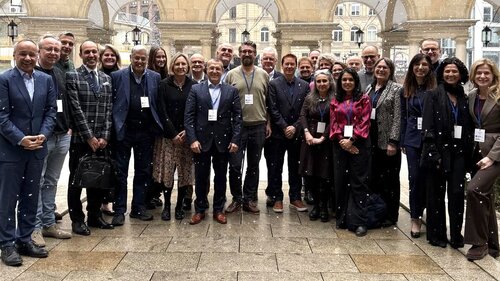
The European Federation of Periodontology held a joint working group meeting with the European Association of Dental Public Health (EADPH) to address the growing burden of oral disease and mounting evidence linking oral health to systemic health outcomes. Titled “Oral health and systemic health outcomes: a call for interdisciplinary action”, the meeting took place on 26 - 27 January 2026 in Frankfurt, Germany supported by Oral-B.
Bringing together experts from periodontology, dental public health, epidemiology, and prevention, as well as medics, including cardiologists, diabetologists and general practitioners representing the World Heart Federation (WHF) and WONCA, the meeting focused on developing a shared, evidence-based framework to support closer interdisciplinary collaboration. The discussions will inform the development of a joint white paper, with an emphasis on primary and secondary prevention, barriers to collaboration across disciplines, and practical recommendations for coordinated action.
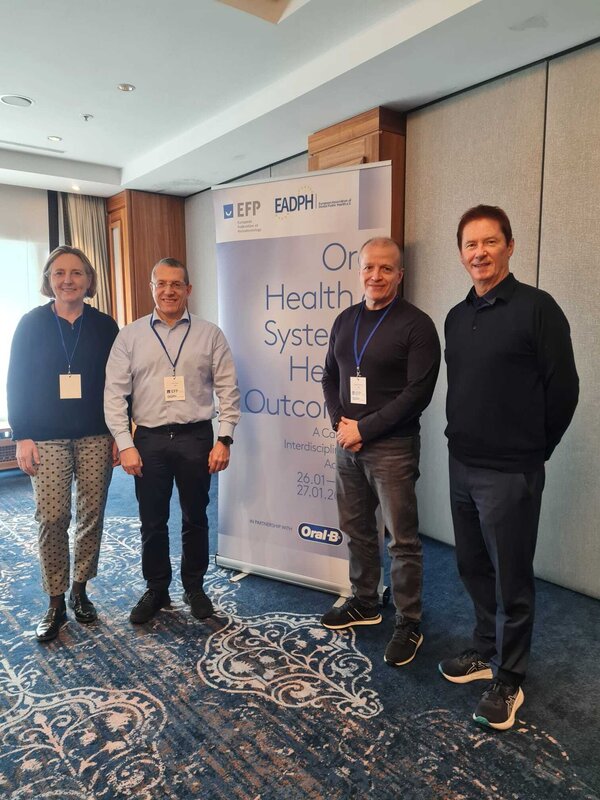
Over two days, participants worked in six parallel working groups aligned with key chapters of the planned publication, covering epidemiological and mechanistic evidence, primary and secondary prevention, and systemic and structural barriers to integrated care. A concluding plenary session synthesized the discussions into overarching messages and recommendations, with agreement on next steps and a writing timeline targeting submission by the end of June 2026.
Central to the framework is the recognition that oral diseases share common, modifiable risk factors with major non-communicable diseases (NCDs), yet prevention remains fragmented and insufficiently integrated within health systems. Using a common risk factor approach, the framework outlines how oral primary prevention can be embedded within mainstream NCD strategies and universal health coverage. It prioritizes high-impact risks (particularly sugar, tobacco, alcohol, and hygiene behaviours) while also addressing broader structural determinants of health.
Discussions highlighted feasible integration mechanisms across policy, primary care, surveillance, workforce training, and community action, supported by a clear economic and equity rationale. Evidence-based individual behaviours were considered alongside upstream population-level interventions, including fiscal policies, fluoridation, and school-based programmes. Particular attention was given to interdisciplinary delivery models, workforce reform, and life-course approaches to reduce inequalities.
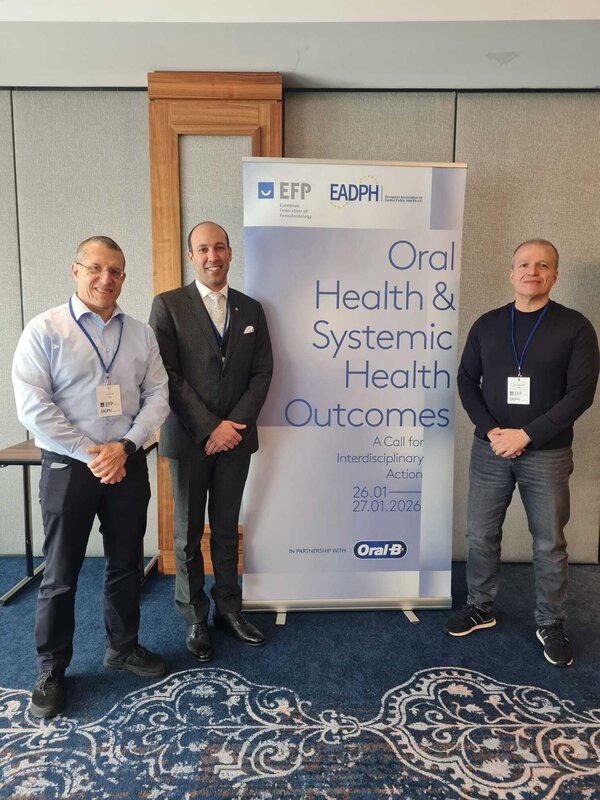
Moritz Kebschull, past president of the EFP, emphasized the importance of the initiative: “Oral diseases are on the rise, even though they are largely preventable. They also share common risk factors with other non-communicable diseases (NCDs), such as smoking and the intake of sugar and alcohol. Many at-risk patients do not regularly visit a dentist, underlining the need to raise awareness among all health professionals and social workers about the links between oral and systemic health and to engage them in prevention efforts. This meeting brought disciplines together to interpret the evidence, identify existing barriers, and agree on realistic recommendations to ensure collaboration among all stakeholders, laying the foundation for interdisciplinary action on oral disease prevention.”
The collaboration reflects a shared commitment by the EFP and the EADPH to place oral health firmly within broader health agendas. Founded in 1996, the EADPH is an independent, science-based forum dedicated to advancing dental public health through the organized efforts of society.
“This working group meeting marks an important step towards embedding oral health within wider health policies, for the benefit of our patients,”concludes Professor Spyros Vassilopoulos, EFP president. “By fostering structured dialogue between periodontology, other healthcare professionals and policymakers, the EFP and EADPH aim to contribute to more coherent strategies that recognize oral health as an integral part of overall health and wellbeing, while respecting the roles of different disciplines in generating and applying the evidence.”
Sign up for our newsletter
The EFP publishes a free monthtly email newsletter with the latest news about the federation's activities, its publications, and its campaigns.
EFP partners









Sign up to our newsletter
The EFP publishes a free monthtly email newsletter with the latest news about the federation's activities, its publications, and its campaigns.
