
Treatment, Article
Digital innovation: Bringing objective assessment of masticatory function into periodontal care
23 November 2026
QUB3 – Digital Masticatory Analyser was recently awarded the first prize in the EFP Digital Innovation Award 2026. Developed to bring objective assessment of masticatory performance into everyday clinical practice, the system aims to make functional assessment more accessible. Prize-winner Luca Aquilanti explains how the project originated and why masticatory function deserves greater attention in periodontal care and beyond.
When we assess a patient with periodontitis, we measure attachment loss, probing depth, bone loss, and tooth mobility. We count teeth and evaluate occlusal support. These findings are essential, but they do not always tell us how well a patient can actually chew. This can become particularly clear in patients with advanced periodontitis. Masticatory dysfunction is recognised among the complexity factors of stage IV periodontitis, yet we still tend to estimate function from oral conditions rather than measure it directly.
QUB3 grew from this clinical need and from research carried out at Università Politecnica delle Marche in Ancona, Italy, by Giorgio Rappelli, Luca Aquilanti, and Mauro Merli. Our group had been using the Two-Colour Mixing Ability Test, in which patients chew a two-colour gum according to a standardized protocol and the degree of colour mixing is analysed. Although well established, this method presented two practical challenges: difficulties in obtaining suitable test gums and the time required to analyse the samples.
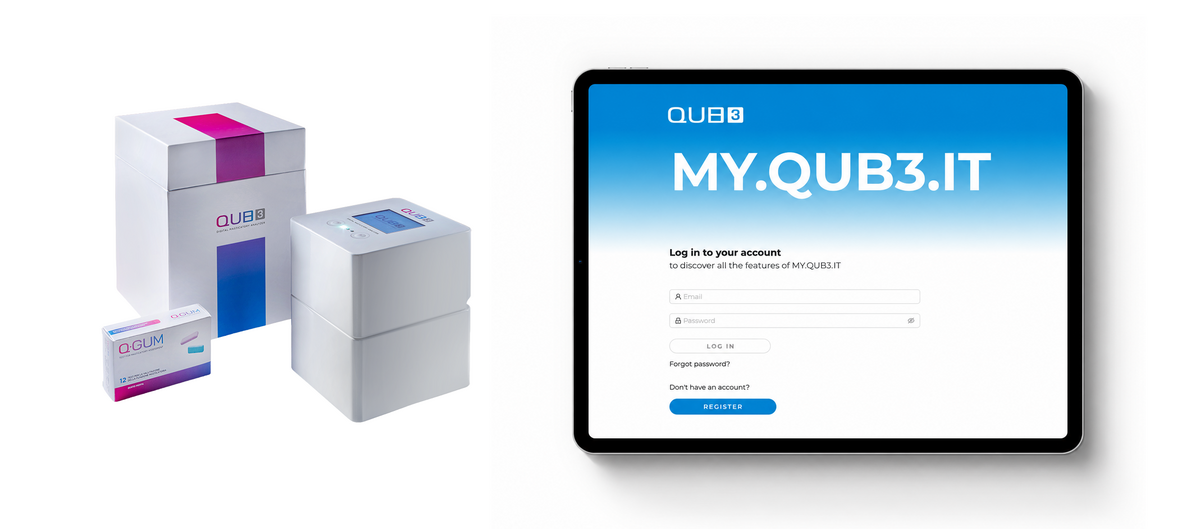
Our aim was therefore to make the test easier to use in daily practice. QUB3 combines three elements: Q-GUM (a dedicated two-colour chewing gum), the QUB3 Digital Masticatory Analyser, and the my.QUB3 cloud platform. After 20 chewing cycles, the sample is analysed through a standardised digital workflow, providing an objective measure that can be stored and compared over time.

In periodontal care, this adds a functional dimension to clinical assessment. QUB3 does not diagnose periodontitis or determine the periodontal stage, but it allows us to assess masticatory performance at baseline and monitor changes during and after treatment.
However, the relevance of masticatory function extends well beyond periodontal care. Chewing is influenced by many oral and systemic factors, and patients with apparently similar clinical conditions may function very differently. This is why we believe masticatory function deserves attention in every patient, throughout life, and not only when difficulties become apparent.
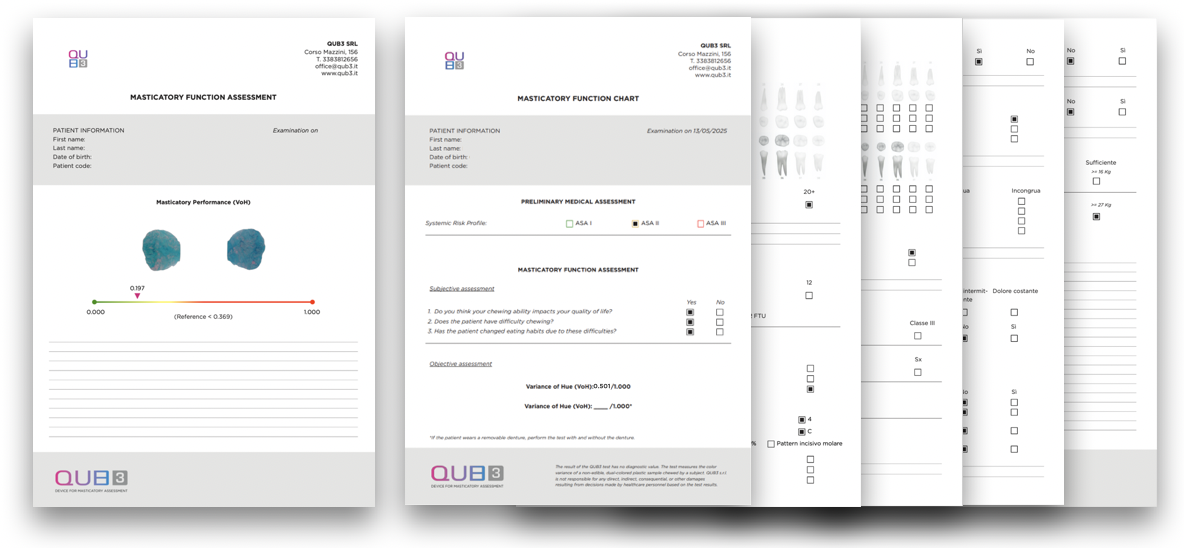
We routinely measure blood pressure or visual acuity, not only when something is wrong, but also to establish a reference and recognise changes over time. Why should masticatory function be different? Measuring it while function is still preserved can provide an individual baseline, help us identify changes over time and, following treatment, assess whether rehabilitation has also resulted in functional recovery.
The implications also extend beyond dentistry. A growing body of evidence has linked impaired chewing function with nutritional status, physical performance, frailty, and other aspects of general health. Oral function is relevant throughout life, from growth and development in children and adolescents to the maintenance of autonomy and healthy ageing later in life. Objectively assessing masticatory performance may therefore help integrate oral function into a broader perspective of health and encourage closer collaboration between dentistry and other areas of healthcare.
The project has now moved from academic research into clinical practice. The first QUB3 devices are already in use in dental practices and academic institutions in Italy and across Europe, and the underlying technology is the subject of an international patent application.
We are also working on the next phase, using artificial intelligence to support a more personalized interpretation of masticatory performance. This includes comparing functional and chronological age and exploring potential functional recovery according to individual determinants and treatment scenarios, while keeping clinical judgement at the centre of all decision-making.
Receiving the EFP Digital Innovation Award is particularly important to us because it recognises this journey from research to clinical practice. QUB3 started with a simple question: if function matters to our patients, why should we not measure it?
Biography

Luca Aquilanti graduated in dentistry at Università Politecnica delle Marche, Italy, where he now works as an adjunct professor. He holds a PhD in biomedical sciences and a specialization in oral surgery. His clinical activity focuses on periodontology and implant therapy, while his academic work centres on masticatory function, healthy ageing. and digital innovation. He has a particular interest in translating research into clinical practice and is a co-founder of QUB3, developed to bring objective masticatory function assessment into everyday clinical practice.
EFP partners








Sign up to our newsletter
The EFP publishes a free monthly email newsletter with the latest news about the federation's activities, its publications, and its campaigns.
