
Education & Career, Article
How the EFP leads the way in education in periodontology and implant dentistry
15 October 2026
Education has always been at the heart of the work of the EFP, which produced guidelines on both undergraduate and postgraduate education in periodontology in the 1990s and launched its accredited postgraduate programmes in 1998 (at ACTA in Amsterdam and Bern in Switzerland). There are now 26 such programmes in 16 countries, ranging from Oslo in the north to Brisbane in the south. Nikos Donos, chair of the EFP education committee, highlights the federation's expanding role in education.
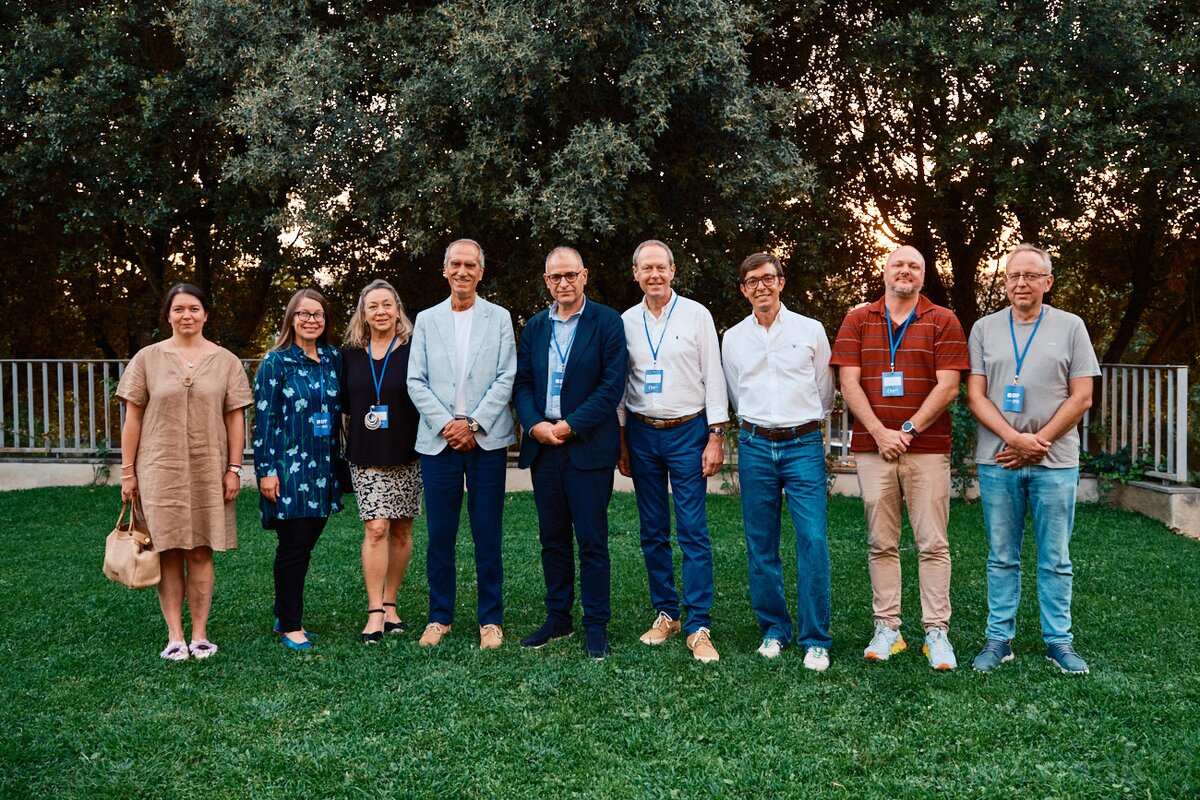
Before you became chair of the education committee, there were separate committees for undergraduate and postgraduate education. What were the reasons for bringing the two together into a single committee?
Undergraduate and postgraduate education are two stages of the same pathway, not separate tracks. Integrating them into a single committee allows us to align curricular guidelines with postgraduate accreditation standards, to identify educational gaps earlier, and to promote education priorities at different levels.
The main benefit has been better coherence across the whole training journey and closer collaboration between academics at different levels. The challenge is balancing two areas with different regulatory demands and paces of change, so we have a dedicated lead for undergraduate matters (Wim Teughels) to ensure they are clearly integrated into the committee's responsibilities.
The accredited postgraduate programmes
What are the main criteria for acceptance as an accredited programme, what is the process involved, and how long does it takes from application to acceptance?
There are four main criteria: the qualifications of the programme director, the structure of the training programme itself, the training facility, and the periodontal clinical service. Programmes must run over three years, offer 180 ECTS*, and combine didactic teaching and research with hands-on, patient-based clinical training in periodontics and surgical implant therapy.
The process starts with a documentation review by the education committee, followed by a site visit of at least two days that comprises interviews with staff and students, facility inspection, and observation of clinical and research activity. The committee then decides on accreditation, sometimes requiring changes to be made first that are deemed necessary for the improvement of the programme.
From application to final accreditation, it typically takes around a year, sometimes longer if changes are requested along the way. Once granted, accreditation is valid for eight years.
What are the benefits to a university periodontology department in becoming an EFP-accredited programme?
EFP accreditation provides a programme with international peer recognition and places it within a network of accredited centres worldwide, which enhances a university’s educational reputation in the field of periodontology. It also provides external validation of teaching quality, since every accredited programme follows the same harmonized, competence-based curriculum.
Beyond recognition, the process itself is valuable. Going through accreditation and periodic reaccreditation pushes departments to continuously self-evaluate and refine their clinical and academic practices. For graduates, it means their training is recognized as meeting a consistent European standard, which supports mobility and career opportunities.
What is the current total of professionals who are alumni of the EFP-accredited programmes?
More than 1,500 periodontists have trained through an EFP-accredited programme. With 26 accredited schools now active across Europe and beyond, and new programmes joining most years, that number continues to grow steadily. The EFP Alumni community was created in 2018 to allow graduates of the accredited programmes to stay in contact with each other as they develop their professional clinical and scientific careers. It now involves more than 500 periodontists.
There are now 26 programmes, including two from outside Europe. As the accredited programmes launched in 1998, this means that the total has grown at a rate of just under one new programme per year. There are 47 EFP member societies, yet only 16 counties represented in the accredited programmes. There are 16 international associate members yet so far only two accredited programmes from those countries, Hong Kong and Queensland, Australia. Why this seemingly slow progress?
Growth has been steady rather than fast, and that is by design as much as by constraint. As my predecessor Moshe Goldstein often pointed out during his nine years chairing the committee, accreditation does not happen on its own. It takes sustained outreach—at congresses, at meetings, in direct conversations with programme directors—to bring new universities into the process. There is also a pattern: once one programme in a country gets accredited, others there tend to follow, seeking the same recognition. So, growth tends to cluster rather than spread evenly.
The wider gap—47 member societies but only 16 countries represented—comes down to the same logic. We can mentor and encourage, but accreditation ultimately depends on individual universities choosing to build a programme that meets the criteria. Where there is a local champion pushing for it, programmes tend to follow.
What are the reasons for programmes disappearing from the list of EFP-accredited programmes?When a programme ceases to be accredited what does it need to do to be reaccredited?
There are several reasons a programme can drop off the accredited list. Sometimes it is a change of director, because accreditation is tied to the qualifications of the person leading the programme: if a replacement is not appointed within a set period, or does not meet our director requirements, the accreditation lapses. At other times, it reflects a change in the university's own priorities: the programme may be restructured, deprioritized, or simply discontinued. And in some cases, it is because the programme no longer meets our quality standards at the point of the reaccreditation review.
If a programme ceases to be accredited, it needs to go through the full accreditation process again from the beginning, just like a new applicant. In total, three programmes have lost their accreditation, of which two are now reaccredited.
What are the expectations for expansion of the programmes over the coming years?
Expanding education is one of the core pillars of the EFP Strategic Plan for 2026-2030, so we expect the network to keep growing steadily rather than in sudden jumps. Realistically, this means a limited number of new programmes each year, given the detailed work involved in every accreditation and the limited size of the committee. While we aim to grow, we need to ensure that quality and standards are maintained for at least eight years, so applicants need not only time to prepare their programme but also to anticipate the challenges they may face over that period.
Growth will likely continue the pattern we have seen so far, coming particularly from member societies that do not yet have an accredited programme, supported by more mentoring for departments preparing their applications.
We also anticipate growth on the international side. Hong Kong and Australia have shown that the model works well outside Europe, and we would like to see more of our associate member countries follow that path in the coming years. We welcome national societies outside Europe to reach out to the committee, and we are glad to advise them on the initial steps and throughout the accreditation process.
The Postgraduate Symposium
The 11th postgraduate symposium has just taken place in Barcelona. How has this event evolved since the first symposium in 2005?
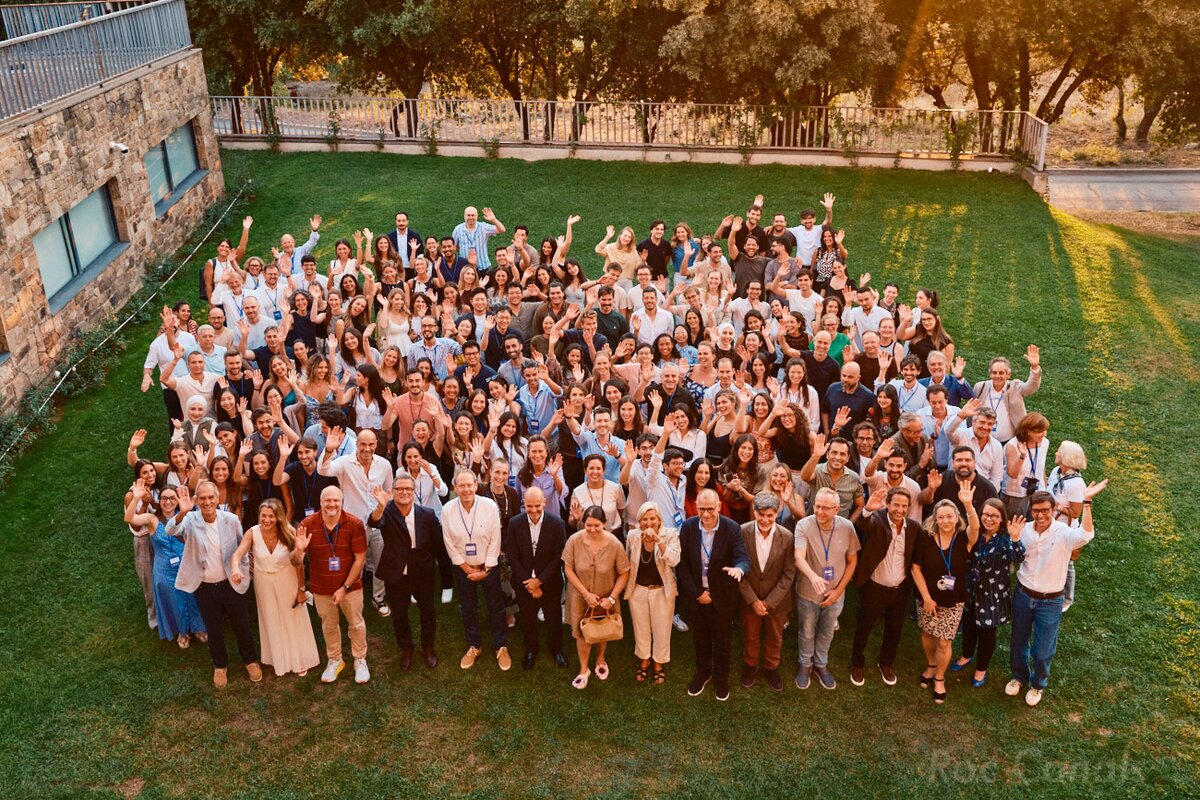
The symposium has grown in almost every dimension since 2005. Back then it was a small, intimate gathering in Switzerland. By 2015, in Spain, it had grown to around 100 participants from 12 accredited centres across 10 countries. By 2017 in Ireland, more than 115 participants represented 15 programmes. At our most recent edition, in Barcelona in September this year, which was sponsored by Dentaid, we had 184 participants from 26 programmes in 16 countries, including our non-European programmes in Hong Kong and Australia.
What has not changed is the spirit: it remains, as we always intended, an event “for the students, by the students”, where second- and third-year postgraduates present their clinical cases and research directly to their peers and to programme directors from across our network.
The scientific level of those presentations has risen from one symposium to the next, as has the range of activities around them, including the Digital Innovation Award, closer alumni engagement, and sessions where senior figures in the field share their own career journeys with the next generation. After the creation of the EFP’s S3-level clinical guidelines, it became clear that there is a harmonization of treatment approaches in the clinical cases that we see at the symposium.
In short, the symposium has grown from a small regional meeting into a genuinely global occasion that reflects how far our network of accredited programmes has expanded.
Over the years, it has raised the level of research and clinical presentations across our network, and it has built lasting connections between students and programmes that often continue well beyond the symposium itself. In that way, there is also a continuous growth of the “EFP family”.
How does the Symposium cope with the increase in the number of accredited programmes?
It is true that, as the number of accredited programmes has grown, we have had to adapt the format to keep things manageable within two or three days. Originally, when we had fewer centres, two students per programme would present. Now, with 26 programmes, we have generally moved to one clinical case per programme. Every centre still gets its moment, but the total number of speaking slots stays realistic.
We also rely on parallel and tightly timed sessions and a full two-day schedule to fit everyone in. Importantly, the students are involved in choosing the format themselves. So, there is really a balance: giving every accredited programme a voice, while keeping the event focused and high-quality rather than diluted.
Undergraduate education
Could you describe the EFP’s work in undergraduate education and how this is integrated into its work in postgraduate education?
Undergraduate education has become a much more active part of our work in recent years. In November 2023, the EFP ran the second European consensus workshop on education in periodontology, in which undergraduate education played a large role in terms of setting standards and competencies in periodontology. This workshop involved various stakeholders, including the Association for Dental Education in Europe (ADEE), and brought together more than 70 experts from 22 countries.
This workshop updated our original 2009 curricular guidelines and produced a new consensus report, published in the Journal of Clinical Periodontology, covering undergraduate and postgraduate education along with continuing professional development and vocational training as a single continuum rather than as separate silos.
This is really the key point, as undergraduate guidance is not developed in isolation. It is built to align with what we expect at a specialist level, so the competencies a dental student learns feed directly into the foundation that postgraduate programmes build on. Bringing the undergraduate and postgraduate work under the aegis of a single education committee reflects that same logic structurally. What we teach at each level should reinforce the next, rather than exist as disconnected tracks.
Are there any changes or innovations planned in the near future?
Yes, a few things are in motion. The new EFP Strategic Plan for 2026-2030 specifically commits to developing new digital learning platforms alongside our traditional curricular guidelines, so I would expect more structured e-learning and digital resources to support undergraduate teaching in the coming years and not just printed guidance documents.
Coming out of the 2023 consensus workshop, there has also been a strong push to formally integrate vocational education and training (VET) into our undergraduate framework, as that pathway was not really addressed in the original 2009 guidelines. With the new competency-based recommendations now published, the next phase is really about supporting universities to actually implement them, through workshops, mentoring, and closer coordination with national dental school.
Looking ahead and combining roles
What have been the main challenges that you and the education committee have faced, and describe any relevant plans?
The main challenge has been pace. Accreditation is voluntary, so growth depends on individual universities coming forward, which means real gaps remain. Some long-standing EFP member societies still have no accredited programme and aligning very different national training systems takes time. Bringing undergraduate and postgraduate education under one committee has also meant learning to balance two areas with different regulatory demands without losing depth in either.
Looking ahead, our new Strategic Plan for 2026-2030 commits us to continuing to increase the number of accredited postgraduate programmes but, at the same time, to develop digital learning platforms, integrating vocational training more formally into our undergraduate framework, and tracking growth more systematically through clear key performance indicators (KPIs). I would also expect continued expansion internationally, building on what we have started with our Asia-Pacific programmes.
As well as being chair of the education committee you are also editor-in-chief of the JCP. How do you manage to combine both jobs? Are there any synergies or other benefits gained from this dual role?
There are real synergies between the two roles.
As editor-in-chief, I am able to maintain constant, open communication with programme directors as research in periodontology and implant dentistry develops, and this helps ensure the continuous dissemination of scientific information at the highest level throughout the EFP's accredited programmes.
Similarly, I receive valuable feedback from programme directors and members of the EFP-accredited teams on the content and quality of the manuscripts published in the JCP, which I find extremely useful.
* European Credit Transfer and Accumulation System, a standard means for comparing academic credits, i.e., the "volume of learning based on the defined learning outcomes and their associated workload" for higher education across the European Higher Education Area (EHEA).
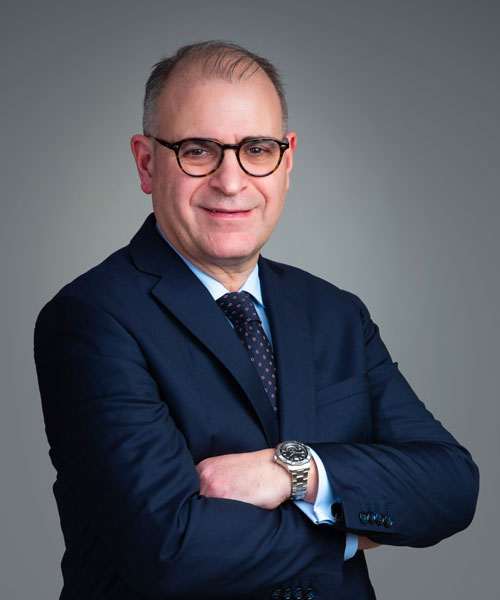
Nikolaos Donos is director of research, professor, and chair of periodontology and implant dentistry at the Centre for Oral Clinical Research, Institute of Dentistry, Queen Mary University of London (QMUL). Chair of the EFP education committee and editor-in-chief of the Journal of Clinical Periodontology, Professor Donos has received the IADR Distinguished Scientist in Periodontal Disease Award and the EFP Distinguished Scientist Award. A past president of the British Society of Periodontology & Implant Dentistry (BSP), Professor Donos leads the Osteology Foundation's science committee and holds honorary and adjunct professorships in Hong Kong, Australia, and London.
EFP partners









Sign up to our newsletter
The EFP publishes a free monthly email newsletter with the latest news about the federation's activities, its publications, and its campaigns.
