
Classification & Guidelines, Article
How to manage acute periodontal conditions—the new EFP clinical-practice guideline
02 November 2026
The EFP recently published its fourth clinical-practice guideline, covering the management of acute periodontal conditions. David Herrera, who chaired the workshop that created the guideline, explains its importance and how it will help clinicians.
How does this guideline on the management of acute periodontal conditions relate to and complement the previous three EFP clinical-practice guidelines?
After the publication of the 2018 Classification of Periodontal and Peri-implant Diseases and Conditions, the EFP started a very ambitious project to develop high-quality clinical-practice guidelines (CPGs) for the management of the listed diseases and conditions.
As the classification also provided case definitions—which assist in the diagnostic process, a crucial aspect for CPG development—the key aspects for starting the project were available. Among the classified diseases and conditions, very few have acute onset, and this new guideline focuses strictly on two acute conditions (periodontal abscesses and necrotizing periodontal diseases) and third condition (endodontic-periodontal lesions) that could have an acute manifestation. As well as the acute onset and the need for urgent care, these three conditions are characterized by severe tissue destruction that can compromise the prognosis of the affected teeth.
This guideline was developed at the European Workshop on Periodontology in November 2025, alongside two other guidelines (to be published in the coming months) on dental biofilm-induced gingivitis and non-dental biofilm-induced gingival diseases and conditions.Previous workshops had focused on just a single guideline. So why this approach and what challenges were involved in having to produce three separate but interrelated guidelines?
The three previous guidelines focused on specific conditions: periodontitis in stages I-III (2020), periodontitis in stage IV (2022), and peri-implant diseases (2023). Conversely, the 2025 European Workshop aimed to develop CPGs for multiple conditions: dental biofilm-induced gingivitis, including gingival enlargement; the very heterogeneous group of non-dental biofilm-induced gingival diseases and conditions; and the already mentioned acute conditions. Considering the differences in scope, as well as some methodological issues, it was decided that three separate CPGs would be easier to read, understand, and be implemented by users.
No big challenges were found when developing three separate CPGs in parallel, since the process and methodology were identical, and many synergies were identified. In addition, the CPGs covering gingival diseases and conditions are clearly connected and bidirectional quoting is found, as they are complementary guidelines. As an example, management of gingival enlargement could have been included in any of the CPGs.
What is the main aim of this guideline, the conditions addressed, and how serious or extensive are they?
The three conditions included in the CPG share acute manifestation (usually with pain), rapid tissue destruction, the need of urgent care, and the risk of progression. Besides these commonalities, they have very particular aspects.
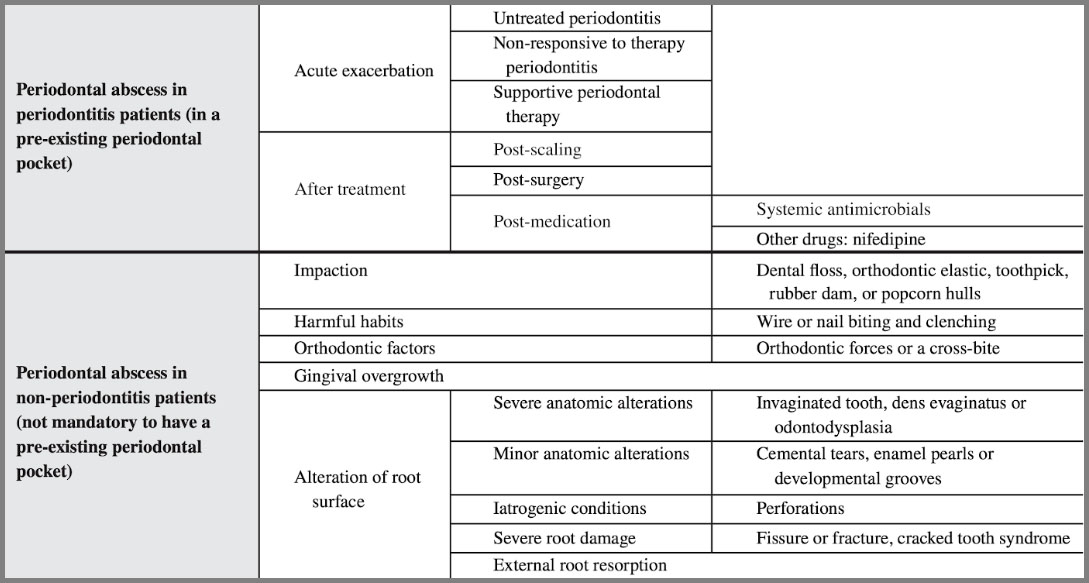
1. Periodontal abscesses are histologically similar to other abscesses in the mouth or in other parts of body. They usually develop in a pre-existing periodontal pocket and, besides the pain, three critical aspects should be highlighted:
- Additional bone destruction that may compromise tooth prognosis, leading to tooth extraction.
- The risk of systemic dissemination, which is rare, but could be very severe.
- Usually, once the acute condition is controlled, appropriate treatment for periodontitis should be provided.
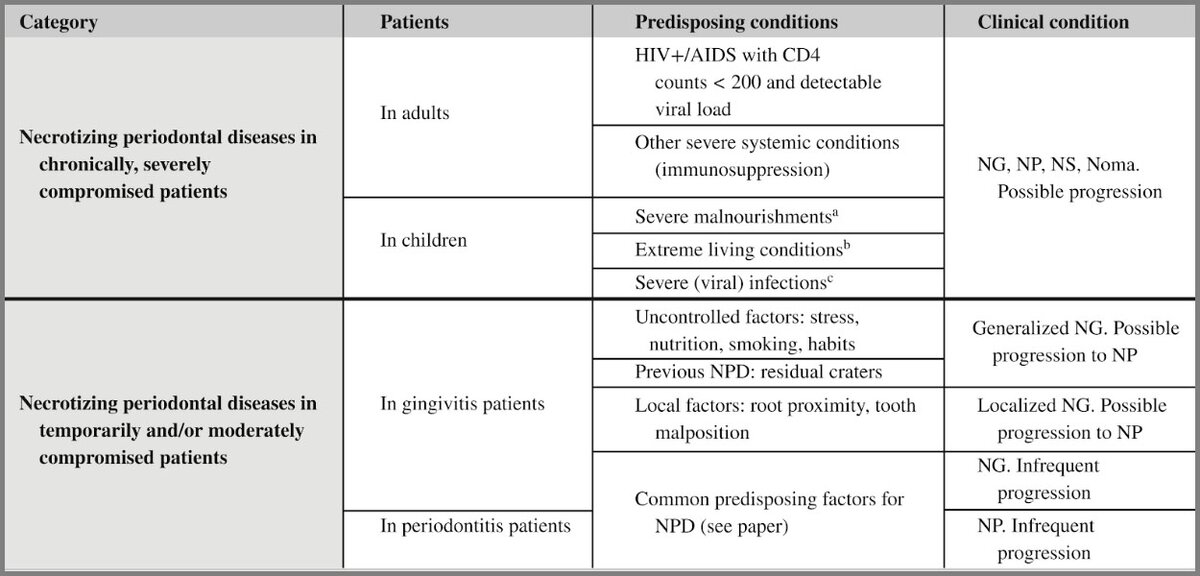
2. Necrotizing periodontal diseases are always painful and involve a significant destruction of periodontal tissues, and a compromised host immune system is needed for their onset. In the most common form, in people who are temporarily and/or moderately immune-compromised, only the gingival tissues are affected. There is limited risk of disease progression, with the main concerns being aesthetic sequalae and the risk of recurrence.
Once the acute condition has been controlled, the treatment of the pre-existing condition—whether gingivitis or periodontitis—must be provided, along with control of predisposing factors (tobacco smoking, psychological stress, etc.). For the necrotizing periodontal diseases in people with severely and chronically compromised immune systems, the condition can be very aggressive, with a high risk of progression, and even life-threating (in children, this progression may lead to Noma, a severe gangrenous disease of the mouth and face).
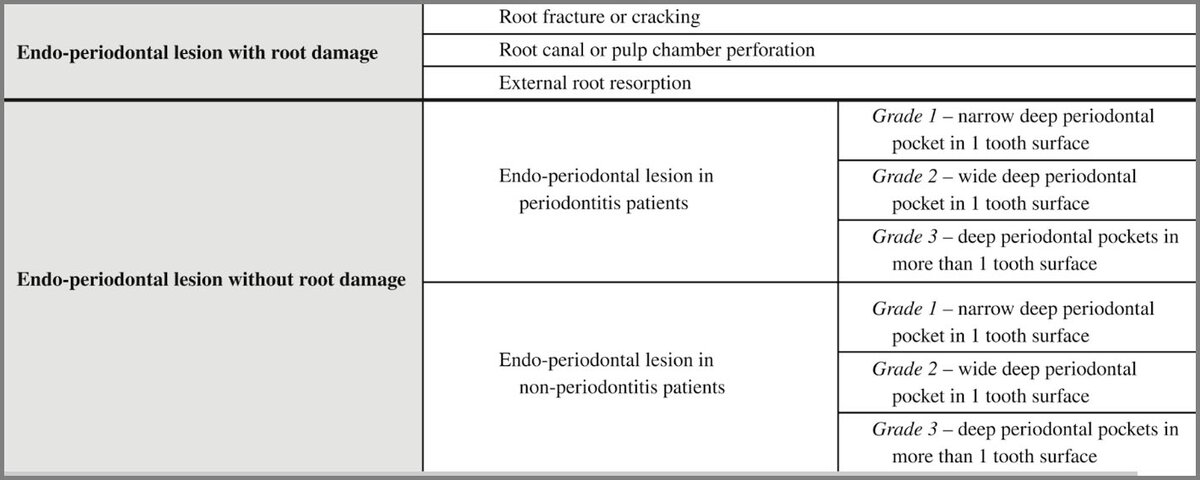
3. Endodontic-periodontal lesions can have an acute manifestation, usually as abscesses. Here, the main challenge is diagnosis and, especially, prognosis, to understand if the communication between the periodontal and endodontic compartments can be reversed.
The guideline is grounded in the 2018 Classification. Since that classification was made, in relation to the acute periodontal conditions covered by the guideline, has any significant new evidence emerged?
With the exception of endodontic-periodontal lesions, the available evidence for acute conditions is limited and, in the case of necrotizing periodontal diseases, relatively old. Some additional information was found to be published between 2018 and 2026, but this did not represent a critical part of the identified evidence.
What were the main challenges faced at the workshop in drawing up the guideline?
For periodontal abscesses, the main limitation was the number of relevant clinical studies providing information for the management—there were just five articles. For necrotizing periodontal diseases, the limiting factor was that most of the published evidence was quite old, and followed different principles for therapy from the ones used today, mainly relying on old-fashioned antimicrobial approaches. For endodontic-periodontal lesions, the heterogeneity of the selected evidence was the main problem to adequately interpret the evidence.
What impact is this new CPG likely to have on everyday clinical practice?
Clear protocols are presented, especially for the management of periodontal abscesses and necrotizing periodontal diseases, with a structured approach that can be easy to implement. For endodontic-periodontal lesions, since the condition is more heterogeneous, the guideline may be more complex to follow, but different alternatives are nonetheless presented and justified.
The previous guidelines have been S3 level, the highest level. This one is S2K level. So why not an S3 level guideline this time? In practical terms what difference does it make that this is S2K and not S3?
S3-level is the highest level and combines evidence-based science with expert consensus-based decisions. In other words, the evidence-based decision-making is the most important component, but gaps are filled, when needed, with expert consensus. As noted above, the guideline on acute conditions presented a limitation in the available evidence for various reasons. As a result, very few evidence-based recommendations could be developed.
The steering committee therefore understood that an S2k-level was more adequate, to acknowledge that most recommendations were based on expert consensus. That does not mean that no evidence was available or used, or that decisions were not based on evidence. The systematic reviews commissioned for the workshop always lead the preparation of the recommendations, but sometimes indirect evidence was used, and other times it was a combination of evidence and expert opinion, always following a structured consensus approach.
Biography

David Herrera is Dean of the Faculty of Odontology and Professor and Chair of Periodontology at the Complutense University of Madrid (UCM), Madrid, Spain, where he is also co-director of the EFP-accredited postgraduate programme in Periodontology and co-director of the ETEP (Etiology and Therapy of Periodontal and Peri-implant Diseases) Research Group (UCM). He was chair of the EFP’s workshop committee (2020-2026) and a former president of SEPA (2013-2016).
EFP partners








Sign up to our newsletter
The EFP publishes a free monthly email newsletter with the latest news about the federation's activities, its publications, and its campaigns.
