
Clinical & Translational Research, Education & Career, Article
How translational research at UIC Barcelona is shaping the future of periodontology
04 September 2026
The 26 EFP-accredited postgraduate programmes provide students not only with professional training in periodontology and implant dentistry but also with opportunities to conduct research in the field. In the coming months, the Publications Hub will feature reports on the research being carried out at these programmes. This first article focuses on the translational research by the International University of Catalonia (UIC) in Barcelona, Spain. José Nart, Cristina Vallès, and Gonzalo Blasi show how understanding biology, embracing minimally invasive therapy, and prioritizing patient-centred outcomes are the three essential pillars to research that is redefining periodontal and peri-implant care.
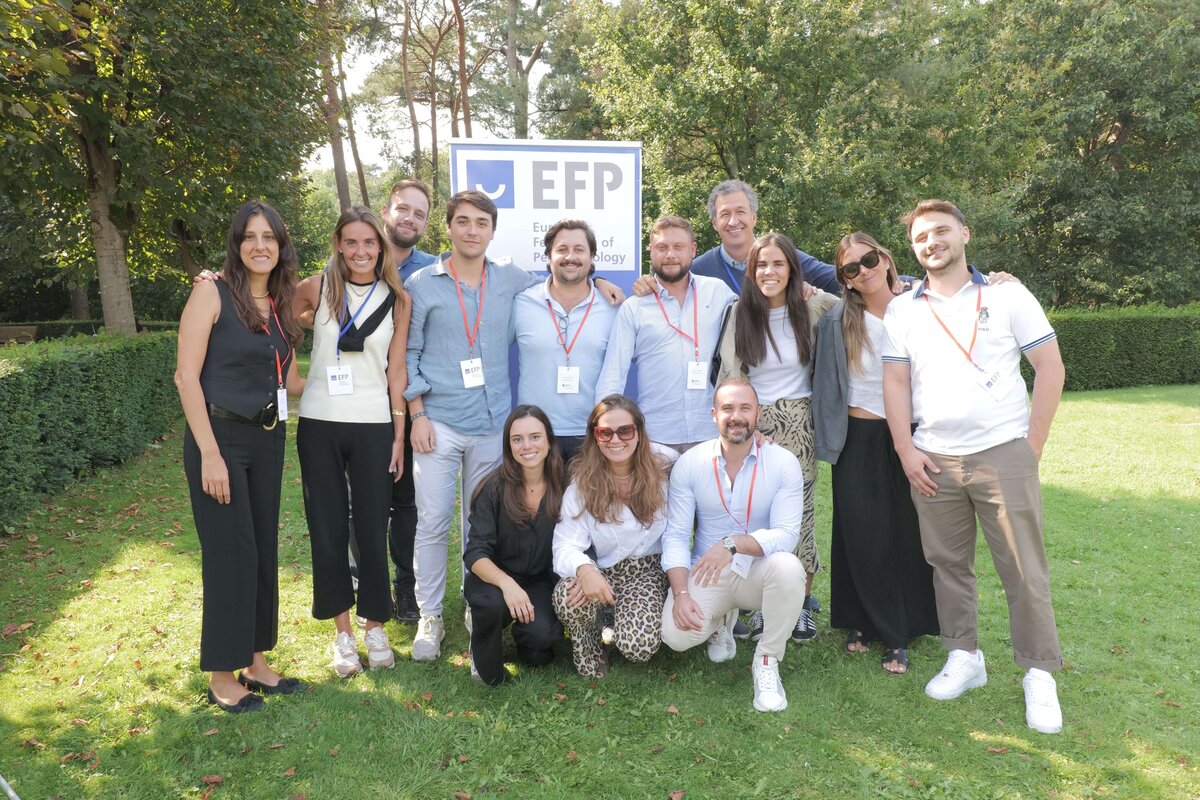
Over recent decades, periodontology has undergone a remarkable transformation. While controlling infection and preventing tooth loss remain fundamental goals, today’s clinicians are increasingly challenged to achieve more than disease resolution. Patients expect treatments that preserve tissues, minimize discomfort, provide long-term stability, and ultimately improve their quality of life.
Meeting these expectations requires more than technical excellence—it demands research that combines biological understanding with clinical innovation.
At the EFP-accredited postgraduate programme in periodontology at UIC Barcelona, translational research forms the foundation of this philosophy. Scientific discoveries are not confined to the laboratory but are continuously translated into clinical protocols that improve patient care. At the same time, clinical challenges inspire new research questions, thereby creating a dynamic cycle of innovation.
Current research within the programme is centred around three complementary pillars:
- Understanding the biology of periodontal and peri-implant tissues.
- Developing minimally invasive therapeutic strategies.
- Evaluating treatment success through patient-centred outcomes.
Together, these research lines contribute to a more personalized, biologically driven, and evidence-based approach to periodontal and implant therapy.
Pillar 1. Understanding the biology that determines clinical success
Modern periodontal therapy begins with biology.
Although clinicians routinely perform regenerative procedures, mucogingival surgery, and implant therapy, many treatment decisions still rely on clinical experience rather than a complete understanding of tissue behaviour.
Researchers at UIC Barcelona are investigating the biological mechanisms that influence healing, tissue stability, and long-term treatment outcomes. Particular attention is being paid to the interaction between hard and soft tissues around both natural teeth and dental implants.
Current projects are exploring subjects such as:
- supracrestal tissue attachment.
- periodontal and peri-implant soft-tissue phenotypes.
- tissue thickness and its influence on treatment outcomes.
- wound healing following periodontal and implant surgery.
- biological responses around restorative margins.
- mechanisms governing long-term tissue stability.
Understanding these biological principles allows clinicians to move beyond standardised treatment protocols and towards truly personalised care.
Successful periodontal therapy starts by understanding how tissues behave. The more we understand biology, the better we can individualize treatment and improve long-term outcomes.
This biological foundation also provides the basis for developing less invasive therapeutic approaches.
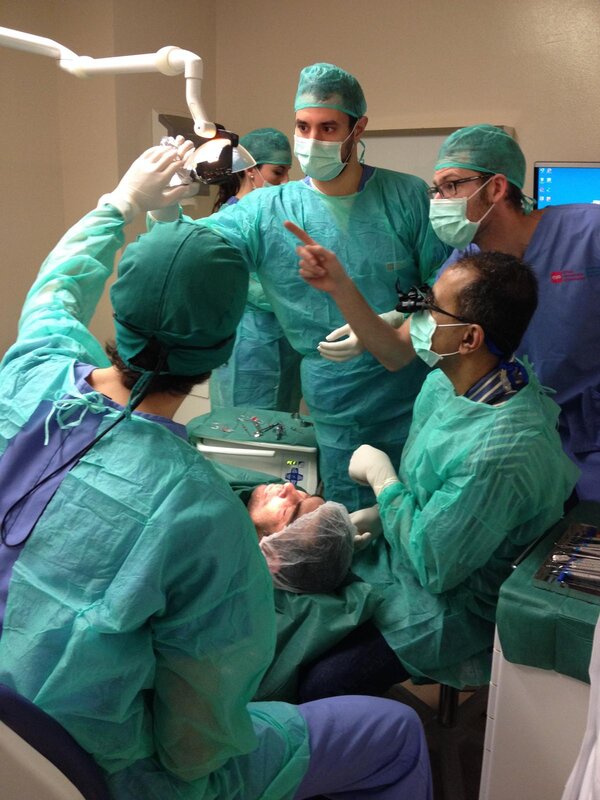
Pillar 2. Minimally invasive therapy: preserving tissues while maximizing outcomes
One of the most active research areas at UIC Barcelona focuses on developing treatment strategies that minimize surgical trauma without compromising effectiveness.
The philosophy is straightforward: preserving healthy tissues whenever possible often leads to faster healing, reduced patient morbidity, and improved clinical outcomes.
This concept has particular relevance in the management of peri-implant diseases, one of the fastest-growing challenges in contemporary dentistry.
Current clinical research at UIC is investigating:
- minimally invasive periodontal surgery.
- flapless approaches for peri-implantitis.
- regenerative treatment concepts.
- optimisation of soft-tissue preservation.
- simplified surgical protocols.
- biological factors associated with successful healing.
Rather than asking whether surgery can simply be made smaller, researchers seek to understand when less treatment may actually represent better treatment.
This work combines randomized clinical trials with biological investigations, allowing clinicians to better understand which patients benefit most from minimally invasive approaches and why.
The ultimate objective is not simply to reduce surgical intervention but to maximize clinical effectiveness while improving the patient’s overall treatment experience.
Pillar 3. Measuring what truly matters: the patient’s perspective
Clinical parameters remain essential for evaluating periodontal treatment. Pocket-depth reduction, clinical attachment gain, and radiographic bone stability continue to be fundamental indicators of success.
However, modern healthcare increasingly recognizes that these measures alone do not fully capture treatment outcomes. How patients feel after therapy—their comfort, confidence, oral function, and quality of life—is equally important.
Researchers at UIC Barcelona therefore integrate patient-reported outcome measures (PROMs) and patient-reported experience measures (PREMs) into many clinical investigations.
Current studies are evaluating:
- oral-health-related quality of life.
- treatment satisfaction.
- pain and postoperative recovery.
- aesthetic perception.
- oral function.
- patient expectations before and after therapy.
This patient-centred philosophy reflects a broader evolution within periodontology: success is no longer defined solely by the clinician but also by the individual who is receiving care.
By combining objective clinical findings with subjective patient experiences, researchers aim to generate evidence that supports more personalized and meaningful treatment decisions.
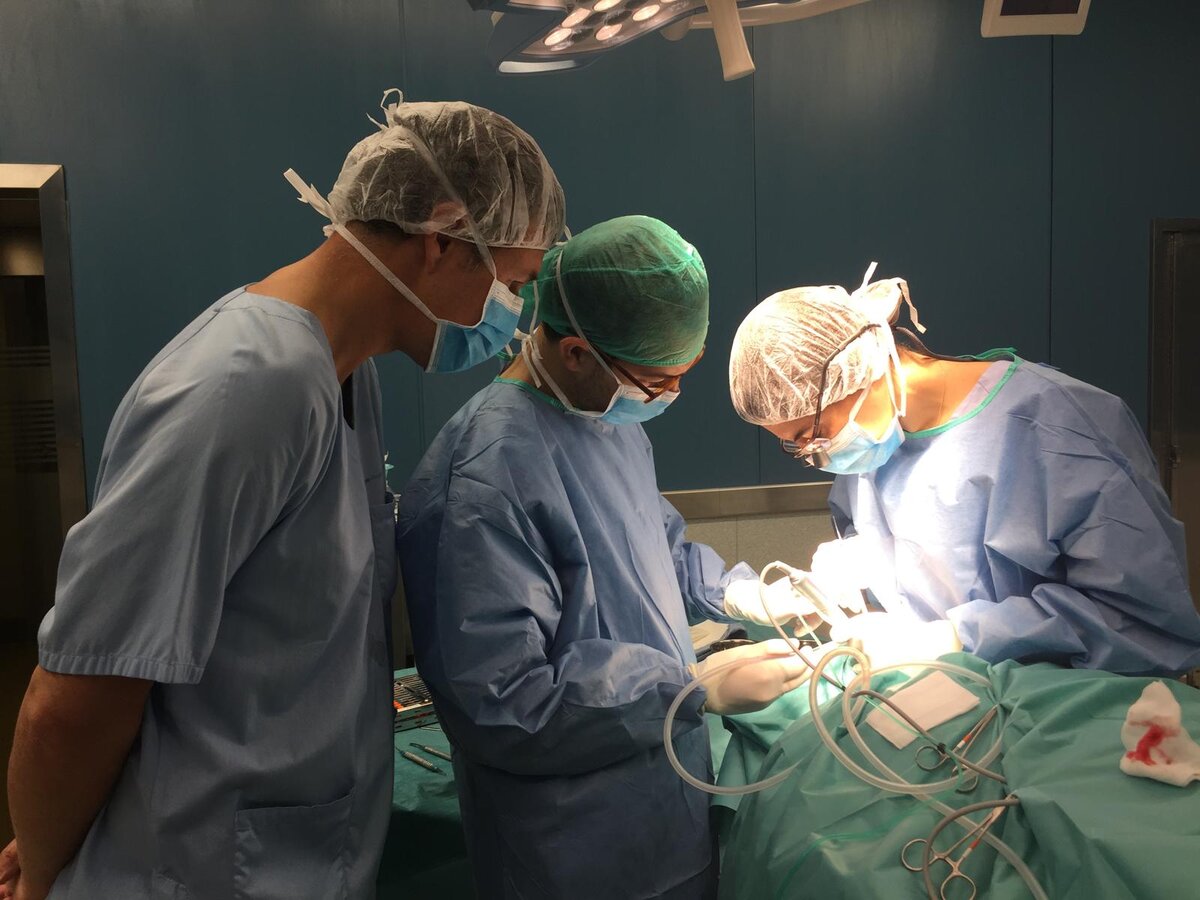
Translational research in action
A defining characteristic of the UIC Barcelona research programme is its close integration between research, education, and clinical practice.
Residents enrolled in the EFP-accredited postgraduate programme participate directly in research activities throughout their training. Clinical questions arising during patient care frequently become the basis of research projects, while scientific discoveries are rapidly translated into new clinical protocols.
This close interaction between scientists, clinicians, and postgraduate students creates an environment in which innovation becomes part of everyday clinical practice.
The programme also benefits from extensive international collaborations, allowing multidisciplinary teams to investigate increasingly complex biological and clinical questions while maintaining a strong focus on evidence-based patient care.
Looking ahead
The future of periodontology will likely be characterized by greater personalization, improved biological understanding, and treatments that are both less invasive and more meaningful to patients. At UIC Barcelona, these concepts are already shaping research.
Future projects will continue exploring the biological mechanisms that determine treatment success, refining minimally invasive therapeutic approaches, and integrating patient-centred outcomes into clinical decision-making. Emerging technologies—including artificial intelligence, digital workflows, and precision medicine—are also expected to complement these research lines, helping clinicians to deliver increasingly predictable and personalized care.
Ultimately, the programme’s ambition is simple but profound: to generate scientific evidence that not only advances periodontal knowledge but also improves the everyday care delivered to patients.
As periodontology continues to evolve, translational research will remain the bridge connecting biological discovery with clinical excellence.
Biographies
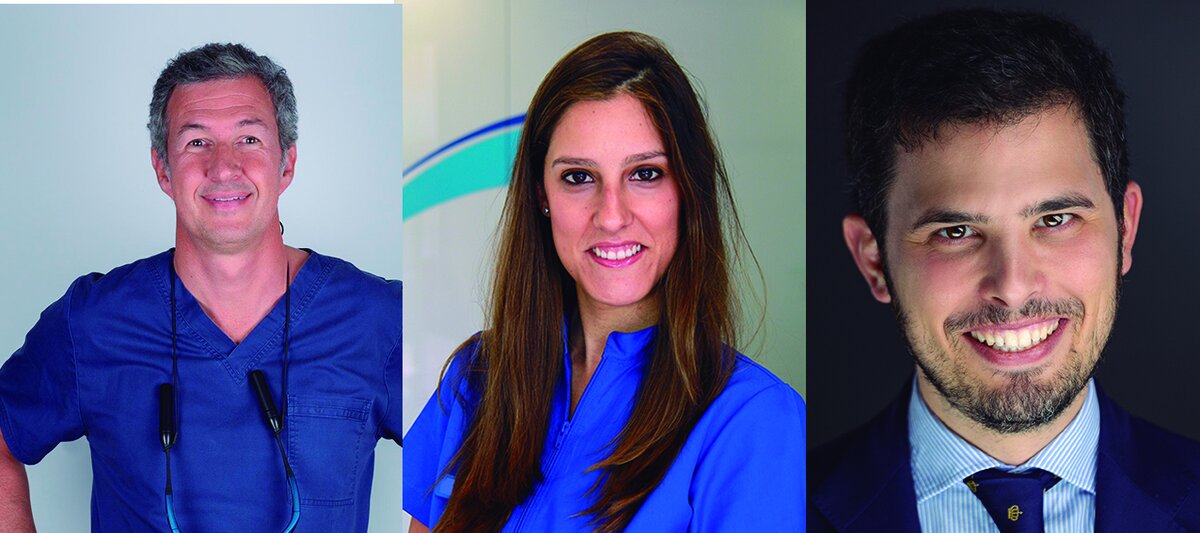
Jose Nart is Professor and Chair of the Department of Periodontology UIC-Barcelona and director of the university’s EFP-accredited postgraduate programme in periodontology. He is a past president of the Spanish Society for Periodontology and Osseointegration (SEPA).
Cristina Vallès is a professor at the Department of Periodontology at UIC Barcelona and co-director of the university’s EFP-accredited postgraduate programme in periodontology. She is coordinator of SEPA’s Implant and Peri-implant Health Community and a former trustee of the SEPA Foundation. Her main clinical and research interests include periodontology, implant dentistry, and the prevention and management of peri-implant diseases.
Gonzalo Blasi is a professor at the Department of Periodontology at UIC Barcelona and co-ordinator of the university’s EFP-accredited postgraduate programme in periodontology. He is also a member of SEPA’s Mucogingival Community. His main clinical and research interests include periodontology, implant dentistry, periodontal plastic surgery, and mucogingival therapy.
EFP partners









Sign up to our newsletter
The EFP publishes a free monthly email newsletter with the latest news about the federation's activities, its publications, and its campaigns.
