
Treatment, Article
What are the challenges of using regenerative interventions to treat stage III/IV periodontitis in the anterior maxilla?
23 February 2026
In a preview of his presentation at Perio Master Clinic 2026 in Baku, Serhat Aslan explains the challenge of treating stage III and stage IV periodontitis in the anterior maxilla using regenerative techniques.
What are the main challenges involved in regenerative interventions in the anterior maxilla and how do they differ from those of the posterior maxilla?
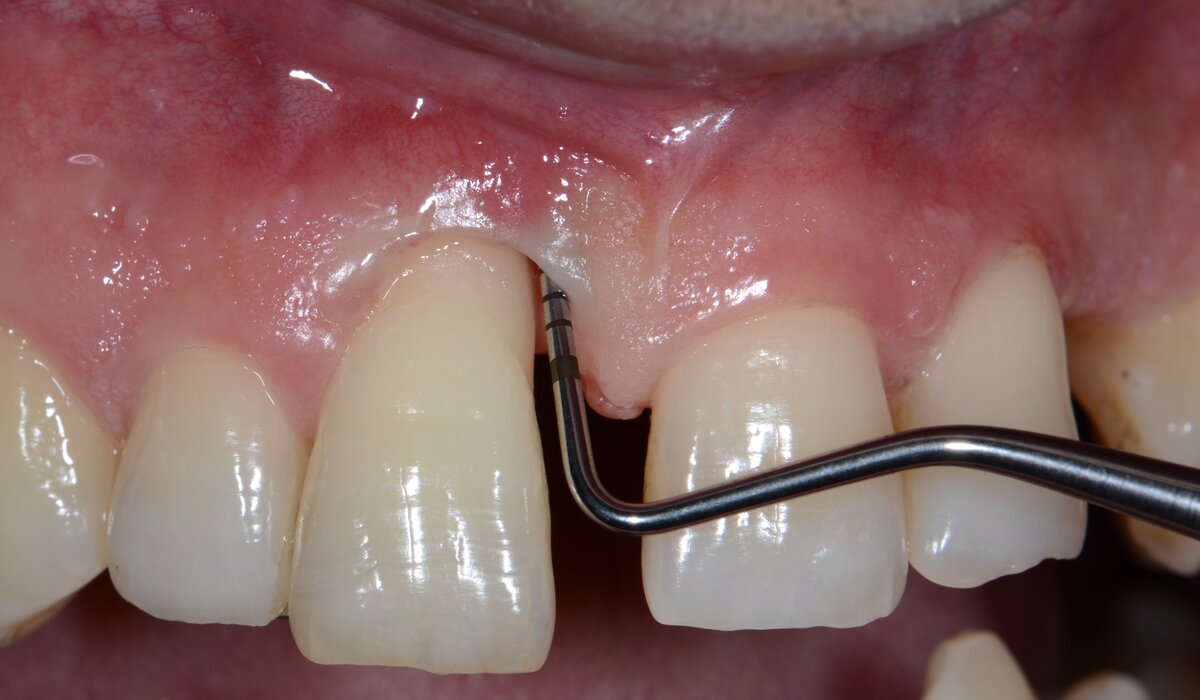
Regenerative interventions in the anterior maxilla presents a distinct set of challenges compared with the posterior maxilla, largely because of differences in anatomy, aesthetic priority, defect morphology, and patient expectations.
Papilla height, the stability of the buccal gingival margin, and the prevention of post-surgical recession are critical. Also, in the presence of thin periodontal tissues, there is a higher risk of soft-tissue collapse and flap shrinkage.
For these reasons, incision design and soft-tissue management must be executed with the utmost conservatism to preserve tissue integrity and optimize clinical outcomes. Conversely, in the posterior maxilla, aesthetic demands are generally lower and the soft tissue is often thicker, which allows the use of more conventional flap designs. Minor recessions or volume changes are usually well tolerated.
The key point is that regenerative interventions in the anterior maxilla are highly technique-sensitive and less forgiving compared with those performed in the posterior maxilla.
What options are available to a clinician depending on the circumstances of individual cases?
The clinician does not choose a regenerative technique, but rather a biologically and aesthetically appropriate strategy—ranging from non-surgical periodontal treatment to advanced microsurgical techniques—based on risk control, defect anatomy, and predictability, especially for high-smile patients. There are multiple treatment options, and I will cover this topic in my lecture at Perio Master Clinic 2026 in Baku.
What are the relevant techniques and their pros and cons?
Surgical techniques should prioritize the achievement and maintenance of primary wound closure. In this context, papilla-preservation approaches have been advocated to maintain soft-tissue integrity and optimize regenerative outcomes. These techniques offer several advantages, including enhanced aesthetic preservation, improved wound stability, and compatibility with a wide range of regenerative biomaterials.
Nevertheless, they are inherently technique-sensitive. In situations with narrow interdental spaces, the restricted access may hinder tissue manipulation and require meticulous suturing to ensure stable primary closure.
In stage III/IV periodontitis, there is likely to be a need for interdisciplinary co-operation (with orthodontists and prosthodontists). What challenges are involved in this co-operation?
Effective communication between clinicians and with the patient represents the principal challenge in interdisciplinary treatment. Variability in clinical approaches—even within similar practice settings—may compromise consistency and continuity of care. In addition, extended treatment timelines can result in patient fatigue and diminished adherence.
Interdisciplinary management also entails a greater financial burden compared with localized therapy. In the context of stage III/IV periodontitis, the limitations of such treatment are driven less by technical feasibility and more by biological constraints and co-ordination complexities.
What contribution is being made by new digital technologies?
While emerging digital technologies do not alter the biological mechanisms or progression of stage III/IV periodontitis, they substantially enhance diagnostic accuracy. For example, cone beam computed tomography (CBCT) imaging facilitates detailed defect analysis, assessment of buccal and lingual bone-plate thickness, and evaluation of soft-tissue dimensions.
In addition, digital impressions and occlusal analysis improve interdisciplinary communication and treatment planning. When applied judiciously—rather than as a substitute for fundamental periodontal principles—these technologies serve as powerful integrative tools in the management of complex cases.
How do the EFP clinical practice guidelines help in this area?
The EFP clinical practice guidelines function as a global reference framework for the management of Stage III/IV periodontitis, especially when interdisciplinary treatment, regenerative strategies, and digital workflows converge.
Their value resides less in technical prescription and more in establishing structured sequencing, risk control, and therapeutic consistency—domains in which interdisciplinary treatment is most vulnerable.
The 2017 World Workshop classification has further provided clinicians with a unified diagnostic and therapeutic language for complex cases. In this context, the periodontist assumes a central co-ordinating role, particularly regarding the initiation of orthodontic therapy and the transition from provisional to definitive prosthetic rehabilitation.
Biography
Serhat Aslan teaches in the department of biomedical, surgical, and dental sciences at the University of Milan in Italy and in the department of oral health sciences, periodontology, and oral microbiology at KU Leuven in Belgium. He is also an invited professor of the postgraduate programme in periodontology and implantology at the University of Porto in Portugal. Professor Aslan maintains a private practice limited to periodontics, fixed prosthodontics and implants, with focus on microsurgery, hard- and soft-tissue reconstruction, and minimally invasive surgery.
Perio Master Clinic is a triennial EFP conference designed specifically for dental clinicians. Taking place in Baku, Azerbaijan, Perio Master Clinic 2026 on the “Perio-Restorative Interplay” will offer participants the latest evidence-based clinical techniques in periodontology, implantology, and restorative dentistry. The scientific programme, featuring 29 speakers and moderators from 12 countries, emphasizes a multidisciplinary approach and will explore innovative products and techniques that provide predictable, aesthetic, and durable results for even the most complex cases.
EFP partners









Sign up to our newsletter
The EFP publishes a free monthtly email newsletter with the latest news about the federation's activities, its publications, and its campaigns.
