

27 May 2026
2025: a year of delivery, stability and global reach
Categories:Communication, Institutional
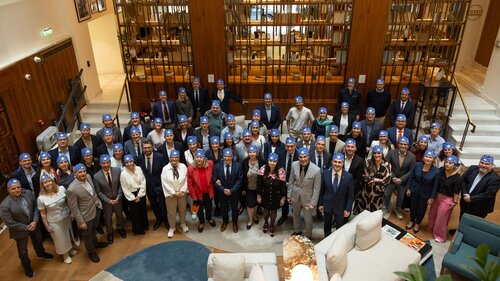
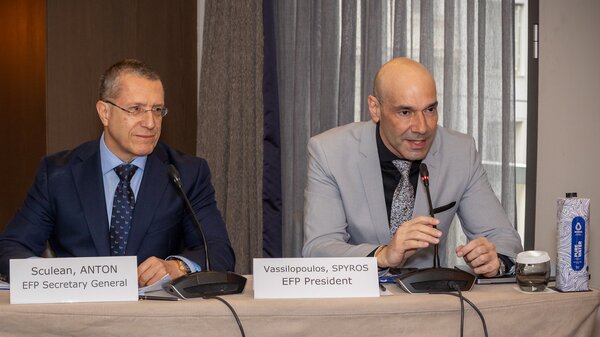
From EuroPerio 11 in Vienna to Perio Master Clinic in Baku, the past year was one of intense activity for the EFP. Under the leadership of past president Spyros Vassilopoulos, secretary general Anton Sculean, and treasurer Andreas Stavropoulos, the federation focused on implementing its Vision 2030 strategy, strengthening partnerships, expanding global reach and reinforcing financial sustainability.
The year was also marked by continuity within the executive committee. Although new members stepped into key roles, the momentum was maintained on long term priorities.
Delivering on Vision 2030
Implementation of the EFP’s Vision 2030 strategic plan remained a central focus throughout the year. The federation continued to advance work across its main pillars of science, education, sustainability, international collaboration and influence.
Education remained high on the agenda. EuroPerio11 in May 2025 and Perio Master Clinic 2026 brought together thousands of oral-health professionals for high-level scientific exchange and continuing education.
One of the scientific highlights was the 21st European Workshop on Periodontology, held in La Granja, Spain, which focused on clinical-practice guidelines for periodontal therapy: gingival disease and acute periodontal conditions. “The workshop was a successful example of translating science into clinical practice,” says Professor Vassilopoulos.
At the same time, the EFP continued strengthening relationships with international partners. During the annual meeting of the American Academy of Periodontology (AAP) in Toronto, Canada, discussions progressed on a future exchange programme between the AAP and the EFP. “This was fully aligned with the strategic plan,” the past president explains. “We are now finalizing the details of how this exchange initiative can work smoothly.”
A joint working group meeting was also held with the European Association of Dental Public Health (EADPH) in January 2026 to address the growing burden of oral disease and mounting evidence linking oral health to systemic health outcomes.
A milestone year for events
EuroPerio11 was a defining moment for the federation. Held in Vienna, Austria, the congress attracted more than 10,000 participants and reinforced its position as the world’s leading congress in periodontology and implant dentistry.
“EuroPerio11 played a major role in financial stability,” observes Professor Vassilopoulos. “It was one of the biggest successes in the history of the congress.” The event also strengthened relationships with partners. “They confirmed their satisfaction not only with EuroPerio11, but also with working with the EFP more generally. Many partners proposed new collaborative projects for the future.”
EFP secretary general Anton Sculean, who was also the congress chair, adds: “EuroPerio11 demonstrated the strength, scientific excellence, and global reach of our periodontal community. The congress highlighted how collaboration, innovation, and education continue to drive our field forward. I am deeply grateful to speakers, researchers who presented their work, delegates, partners and everyone who contributed to making EuroPerio11 such an outstanding success.”
Perio Master Clinic 2026 in Baku, Azerbaijan, represented another strategic milestone for the EFP. The event expanded the federation’s reach into Eastern Europe and neighbouring regions, attracting participants from countries including Turkey, Russia, Georgia, Armenia, and Azerbaijan.
“It helped us reach new audiences and increase visibility beyond western Europe,” remarks Professor Vassilopoulos.
However, organizing the event during a period of instability created significant challenges. “We had to deliver a high-quality programme while dealing with uncertainty around travel and participation,” he points out. “Nevertheless, we delivered a strong meeting and participants were very satisfied.”
Advocacy and public engagement
Public awareness and advocacy also advanced during the year. The EFP continued expanding Gum Health Day through a new three-year campaign model designed to give member societies greater flexibility and more time to adapt campaign materials locally.
“Previously, societies sometimes felt under pressure to adapt quickly to a new campaign each year,” says Professor Vassilopoulos. “Now they have more time and room to join the campaign in a way that works for them.”
The federation also organized public activation events in Vienna and Baku, combining educational outreach with media engagement and public interaction before big events.
“We offered free dental check-ups, distributed information materials, spoke to the public, and engaged with local media,” he explains. “These activities helped increase visibility for oral health, for our events, and for the EFP itself.”
Fostering development and collaboration
For Anton Sculean, the first year as EFP secretary general has focused on continuity, co-ordination, and supporting the federation’s long-term strategic development.
“When I look at the main priorities, it was first of all to ensure continuity and strengthen co-ordination across the federation,” says Professor Sculean. “This meant working closely with the executive committee, the central office, and member societies to keep communication smooth and decisions aligned.”
Sculean highlights the importance of maintaining collaboration across the federation’s many committees, member societies, partners, and stakeholders.
“The EFP federates many countries, different cultures, and different expectations,” he observes. “The collaboration has to be actively nurtured.”
One priority has been strengthening communication between committees and encouraging a more unified approach to projects and decision-making. “I tried to foster better teamwork between our committees and encouraged them to answer questions as one entity,” he remarked. “At the same time, it is important to respect different perspectives and ideas.”
He also underlines the importance of keeping close contact with national societies.
“It is very important that member societies feel fully engaged and that we consider their opinions,” says Professor Sculean. “Different parts of Europe may have different perspectives, and this diversity is valuable for the federation.”
Supporting younger colleagues within the EFP has also been a major focus.
“When appointing members to committees, it was essential to create a balance between experienced colleagues and younger generations,” he explains. “Only in this way can we ensure continuity and provide opportunities for growth.”
Looking ahead, his priorities remain closely linked to the Vision 2030 strategy.
“I would like to continue strengthening the cohesion and effectiveness of the federation,” states Professor Sculean. “The EFP must remain the leading voice in science, education, and clinical practice.”
He also reflects on the personal significance of the role.
“For me, serving as secretary general is both a responsibility and a privilege,” he concludes. “It is an opportunity to support a federation that has a major impact on our field and to help ensure that the EFP continues to grow in excellence, cohesion, and international influence. I very much appreciated the professionalism, commitment, and collegial spirit of my colleagues, we have a transparent way of communicating and discussing issues, and most decisions were supported unanimously.”
Financial stability and sustainable growth
The EFP’s financial strategy continues to focus on long-term stability, prudent management, and sustainable planning.
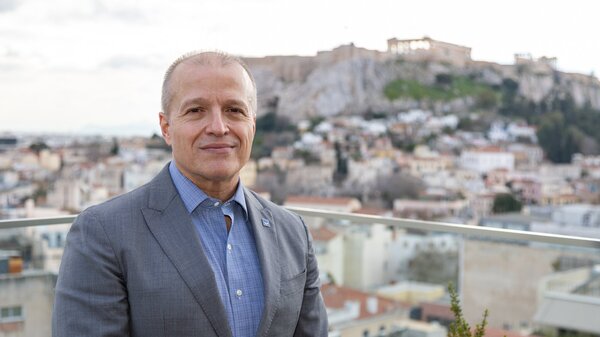
According to the federation’s treasurer, Andreas Stavropoulos, maintaining financial stability remains particularly important for a knowledge-based non-profit organization representing national societies.
“The EFP is committed to maintaining long-term financial stability through prudent financial management, careful budgeting, and continuous monitoring of operational costs,” he says.
Efforts are consistently directed toward the rationalization and control of expenses, ensuring that available resources are utilized efficiently and prudently in order to accomplish the federation’s mission and strategic objectives.
EuroPerio is the federation’s principal source of revenue, and the success of EuroPerio11 in Vienna provided an important boost. “EuroPerio11 was very well received,” notes Professor Stavropoulos. “However, EuroPerio is a triennial event, and a major part of the revenue goes back to our member societies. This means that careful management of resources between congress cycles remains essential,” he explains.
The EFP also continues to prioritize transparent governance and sustainable planning. “By putting in place cost-effective practices, transparent governance, and sustainable planning, the organization seeks to strengthen its capacity to support knowledge generation and dissemination, as well as advocacy in Europe and beyond, while preserving financial stability.”
The treasurer also highlights the importance of collaboration with partners: “The EFP acknowledges the great support from our partners. These collaborations are both fruitful and very important, and the federation sees them as a synergy towards a common goal: improving oral health.”
The past year reinforced the EFP’s scientific leadership and its growing international profile. With International Perio Master Clinic 2027 and EuroPerio12 on the horizon, the federation now looks ahead to the next stage of implementing Vision 2030 and continuing to strengthen its global community.
Sign up for our newsletter
The EFP publishes a free monthtly email newsletter with the latest news about the federation's activities, its publications, and its campaigns.
EFP partners









Sign up to our newsletter
The EFP publishes a free monthly email newsletter with the latest news about the federation's activities, its publications, and its campaigns.
