
Classification & Guidelines, Clinical & Translational Research, Article
How should we treat gingival and periodontal diseases and conditions in under-18s with underlying systemic diseases and conditions?
14 September 2026
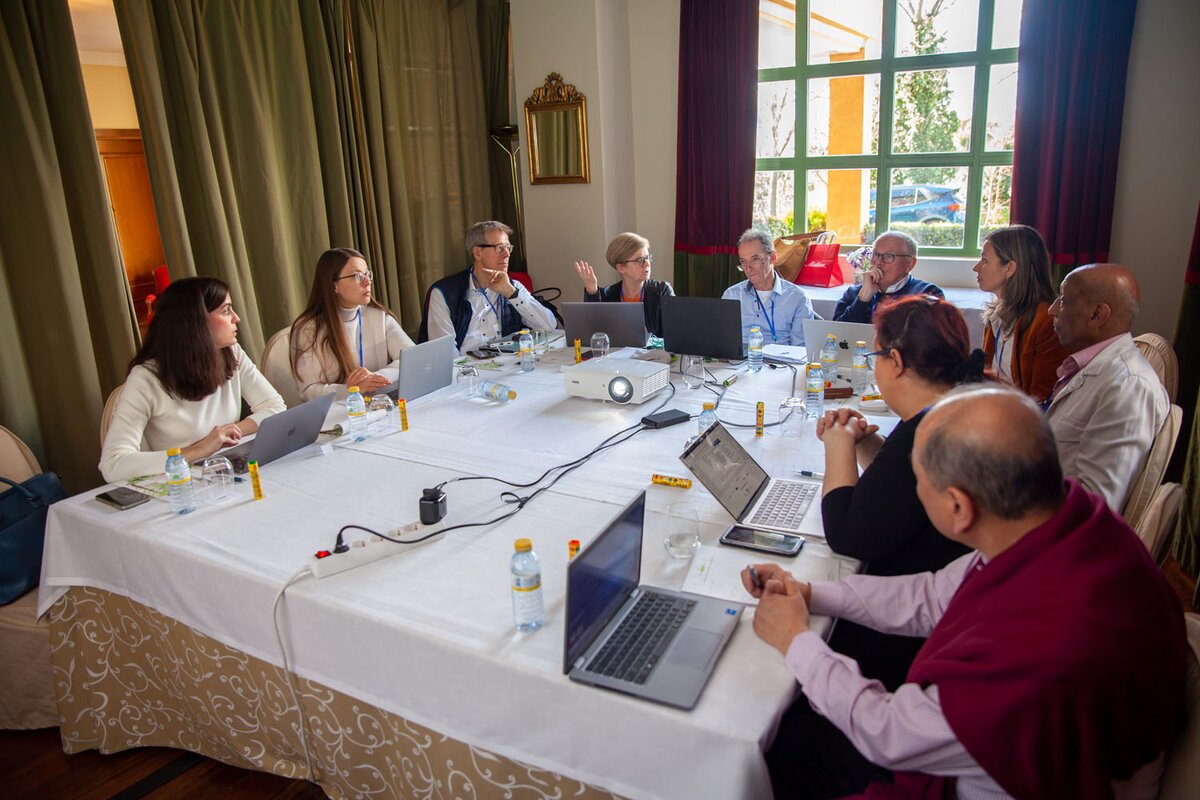
The consensus report of the focused workshop organized by the EFP and the European Academy of Paediatric Dentistry (EAPD) on gingival and periodontal diseases in children and adolescents was published in the July 2026 issue of the federation’s Journal of Clinical Periodontology. At the workshop, three working groups considered systematic reviews and developed their consensus view. Working group 1, chaired by Iain Chapple (EFP) and Dominique Declerck (EAPD), addressed the complex and heterogeneric gingival and periodontal diseases and conditions in children and adolescents with underlying systemic diseases and conditions. Iain Chapple reports on the findings.
More than 70 genetic, congenital, and acquired systemic conditions that impact upon the periodontal tissues were identified by the systematic review that underpinned the working group’s investigation (Molina et al., 2026). These conditions were categorized into four groups:
- Genetic and congenital systemic conditions that impact upon periodontal tissues.
- Acquired systemic conditions that impact upon periodontal tissues.
- Genetic and congenital conditions that impact upon periodontal disease onset, progression, or response to periodontal therapy.
- Acquired conditions that impact upon periodontal disease onset, progression, or response to periodontal therapy.
The distinction between these groups is important because the first two categories are, by definition, non-plaque-induced conditions, which map onto the 2018 classification of non-dental-biofilm-induced gingival diseases (Chapple et al., 2018) and systemic disorders that result in the loss of periodontal tissue attachment independently of dental-plaque biofilm (Jepsen et al., 2018). The latter two groups map onto systemic disorders that impact upon periodontal tissue loss by influencing periodontal inflammation—such as Down Syndrome and Ehlers Danlos syndrome (Jepsen et al., 2018; Malfait et al., 2017)—within the 2018 classification system for adults.
The search identified more than 2,760 manuscripts, which varied in terms of evidence quality from cohort and cross-sectional studies to case series and case reports. The quantity of reports per condition also varied widely from one or two for some conditions to 567 papers for Papillon-Lefèvre syndrome.
Key terms were defined before the group developed a “core dataset for periodontal diseases and conditions associated with systemic disorders in children and adolescents”. This serves as a “look-up table” outlining the aetiology, periodontal manifestations, other orofacial manifestations, recommended management, and impact on the onset and progression of each condition and the response to periodontal therapy, where appropriate. These terms were:
- Genetic disorders: conditions that result wholly or partly from mutations within the genome—e.g. cancer develops as a consequence of acquired genetic mutations that are not inherited and thus are not transmitted between generations. Consequently, genetic disorders may be either hereditary or non-hereditary.
- Congenital disorders: those present at birth and which may be hereditary, arising from inherited genetic factors, or non-hereditary, resulting from environmental or maternal influences during foetal development (e.g. enamel defects associated with maternal illness during pregnancy).
- Hereditary disorders: conditions passed down from one generation to the next, which may have a genetic and/or congenital origin.
(For more detail, see Table 7 in the consensus report)
The systematic review identified 11 systemic diseases or conditions that impact upon the onset, progression, or therapeutic response of gingivitis or periodontitis, and more than 70 non-plaque-induced systemic diseases or conditions that present within and impact upon the periodontium.
Importantly, working group 1 excluded both “other” non-plaque-induced gingival lesions in systemically healthy children and adolescents, such as epulides, pigmented and traumatic lesions (these were dealt with by working group 2) and “other” non-plaque-induced periodontal lesions in systemically healthy individuals such as mucogingival deformities (tackled by working group 3).
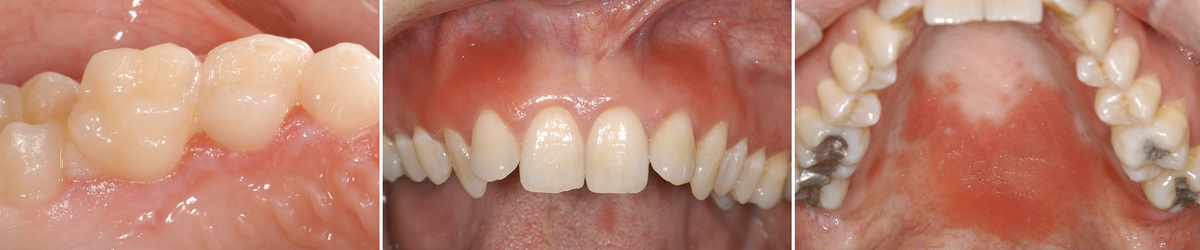
Images from: Iain L.C. Chapple / John Hamburger, Periodontal Medicine: a Window on the Body, 2006, Quintessence Publishing.
Developing a classification
A classification was developed for children and adolescents with systemic conditions that impact the periodontium:
1. Systemic genetic, congenital, and acquired conditions that impact upon periodontal tissues
a. Genetic and congenital systemic conditions that impact upon periodontal tissues:
(1) Structural disorders (n=12, some with sub-groups)
(2) Neoplastic conditions (n=2)
(3) Immunological/inflammatory diseases (n=14)
(4) Metabolic and endocrine disorders (n=2)
b. Acquired systemic conditions that impact upon periodontal tissues:
(1) Neoplasms
i. Benign (n=9)
ii. Malignant (n=5)
(2) Granulomatous inflammatory-immune conditions (n=4)
(3) Acquired immune conditions (n=2)
(4) Atopic (hypersensitivity) conditions (n=1)
(5) Autoimmune conditions (n=6)
(6) Giant cell lesions (n=2)
(For more detail, see Table 5 in the consensus report)
2. Systemic diseases/conditions that impact upon the onset, progression, or response to treatmentof dental biofilm-induced periodontal diseases
a. Congenital conditions that impact upon periodontal disease onset, progression or response to periodontal therapy:
(1) Down syndrome
(2) Prader-Willi syndrome
b. Acquired conditions that impact upon periodontal disease onset, progression, or response to periodontal therapy:
(1) Tobacco exposure
(2) Asthma
(3) Endocrine and metabolic conditions (n=6 sub-groups)
(4) Mental health
(For more detail, see Table 6 in the consensus report)
Management strategies
Recommended management strategies for systemic conditions affecting the periodontal tissues depend upon the underlying diagnosis and access to appropriate expertise (see Table 7 of the consensus report). Differential and/or definitive diagnosis requires a forensic approach to collecting a history from the patient or guardian—including a medical, family, social, and symptom history—and a systematic approach to examining the extra- and intraoral tissues, followed by clinical investigations including blood tests, imaging, and biopsies as appropriate.
Care is often multidisciplinary, involving medical, dental, and surgical specialists in accordance with national guidance. Management should also recognize the important role of family members or caregivers and, where appropriate, include behavioural support. Medical conditions are primarily managed by the relevant physician, with input from paediatric dentistry and/or periodontal specialists. Depending upon the condition, additional expertise from oral and maxillofacial surgery, special-care dentistry, oral medicine, oral pathology, or maxillofacial radiology may be required.
The EFP/EAPD focused workshop on gingival and periodontal diseases in children and adolescents was held in Madrid, Spain, in March 2025. The workshop was sponsored by Colgate-Palmolive, one of the EFP’s partners. The consensus report was published in the July 2026 edition of the Journal for Clinical Periodontology.
Bibliography
Chapple I, Gizani S, Sanz M, et al. 2026. “Gingival and Periodontal Diseases and Conditions in children and Adolescents: Consensus Report.” Journal of Clinical Periodontology 53(7):1068-1099. doi: 10.1111/jcpe.70033. Epub 2026 Apr 15.
Chapple I, Gizani S, Sanz M, et al. 2026. “Gingival and Periodontal Diseases and Conditions in children and Adolescents: Consensus Report.” European Archives of Paediatric Dentistry 28. https:// doi. org/10. 1007/ s4036 8-025-01154-y.
Chapple ILC, Mealey BL, Van Dyke TE, et al. 2018. “Periodontal Health and Gingival Diseases and Conditions on an Intact and a Reduced Periodontium: Consensus Report of Workgroup 1 of the 2017 World Workshop on the Classification of Periodontal and Peri-Implant Diseases and conditions.” Journal of Clinical Periodontology 45, Suppl 20: S68–S77. https:// doi. org/ 10. 1111/ jcpe. 12940.
Jepsen S., Caton JG, Albandar JM, et al. 2018. “Periodontal Manifestations of Systemic Diseases and Developmental and Acquired Conditions: Consensus Report of Workgroup 3 of the 2017 World Workshop on the Classification of Periodontal and Peri-Implant Diseases and Conditions.” Journal of Clinical Periodontology 45, Suppl 20: S219–S229. https:// doi. org/ 10. 1111/ jcpe. 12951.
Malfait F, Francomano C, Byers P, et al. 2017. “The 2017 International Classification of the Ehlers-Danlos Syndromes.” American Journal of Medical Genetics Part C: Seminars in Medical Genetics 175(1): 8-26. https:// doi. org/ 10. 1002/ ajmg.c. 31552.
Molina A, Meyle J, Ram D, Chun Y-HP, Colmenares ME, Davidovich, E. 2026. “Periodontal Diseases and Conditions in Children and Adolescents Associated with Systemic Disorders: A systematic Review.” Journal of Clinical Periodontology 53(7): 1199-1225.

Iain Chapple is a former director of research, Institute of Clinical Sciences and former Dean of Birmingham University Dental School, UK. He has authored 15 textbooks, 44 chapters and 330 papers. He served the EFP as treasurer (2007-2017), chair of the scientific affairs committee Chair (2013-2016), and secretary general (2016-2019). Awards include the Royal College of Surgeons Tomes Medal (2011), IADR Distinguished Scientist in periodontal research (2018), EFP Eminence in Periodontology Award (2022), MBE (2022). His research focuses on periodontal-systemic disease mechanisms and immune-microbial interactions. He is a consultant to England’s Chief Dental Officer.
EFP partners









Sign up to our newsletter
The EFP publishes a free monthly email newsletter with the latest news about the federation's activities, its publications, and its campaigns.
