
Classification & Guidelines, Clinical & Translational Research, Publication Type, Article
Gingival and periodontal diseases in children and adolescents—key messages from workshop’s consensus report
14 September 2026
The consensus report of the focused workshop organized by the EFP and the European Academy of Paediatric Dentistry (EAPD) on gingival and periodontal diseases in children and adolescents was published in the July 2026 issue of the federation’s Journal of Clinical Periodontology. Workshop chair David Herrera outlines the aims, challenges, and key findings of the workshop. Subsequent articles will focus on the three specific areas tackled at the workshop.
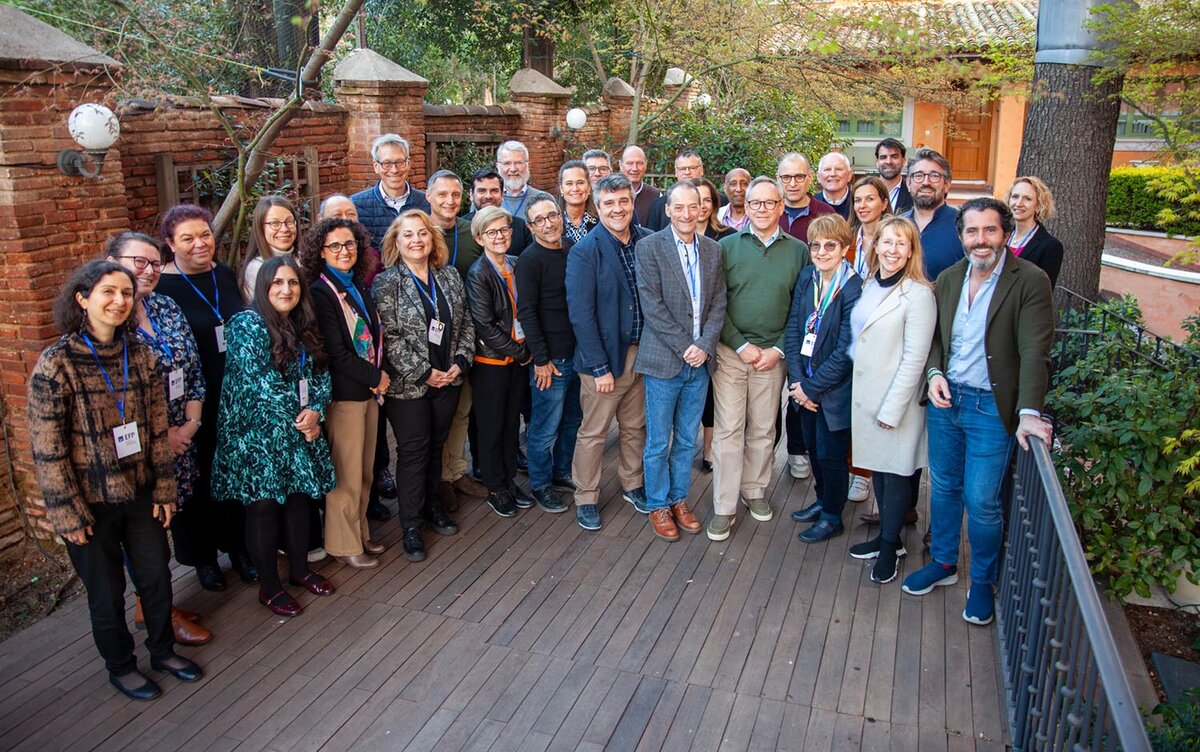
The European Federation of Periodontology (EFP) has organized scientific workshops and published their consensus reports since 1993. The original format, the European Workshop on Periodontology, involves meetings of up to 80 participants and they cover relatively large areas. A smaller format, the so-called focused workshops, started in 2017, covering more specific topics and always in collaboration with other relevant scientific institutions.
The first of these workshops covered the association of diabetes and periodontitis and was jointly organised with the International Diabetes Federation (2017). It was followed by workshops on periodontitis and cardiovascular diseases (with the World Heart Federation, 2019), the associations of periodontitis with diabetes, cardiovascular diseases, and respiratory diseases (with the WONCA Europe association of family doctors, 2022), and patient-based outcomes in mucogingival therapy around teeth and implants (with the Spanish and Italian societies of periodontology, 2025).
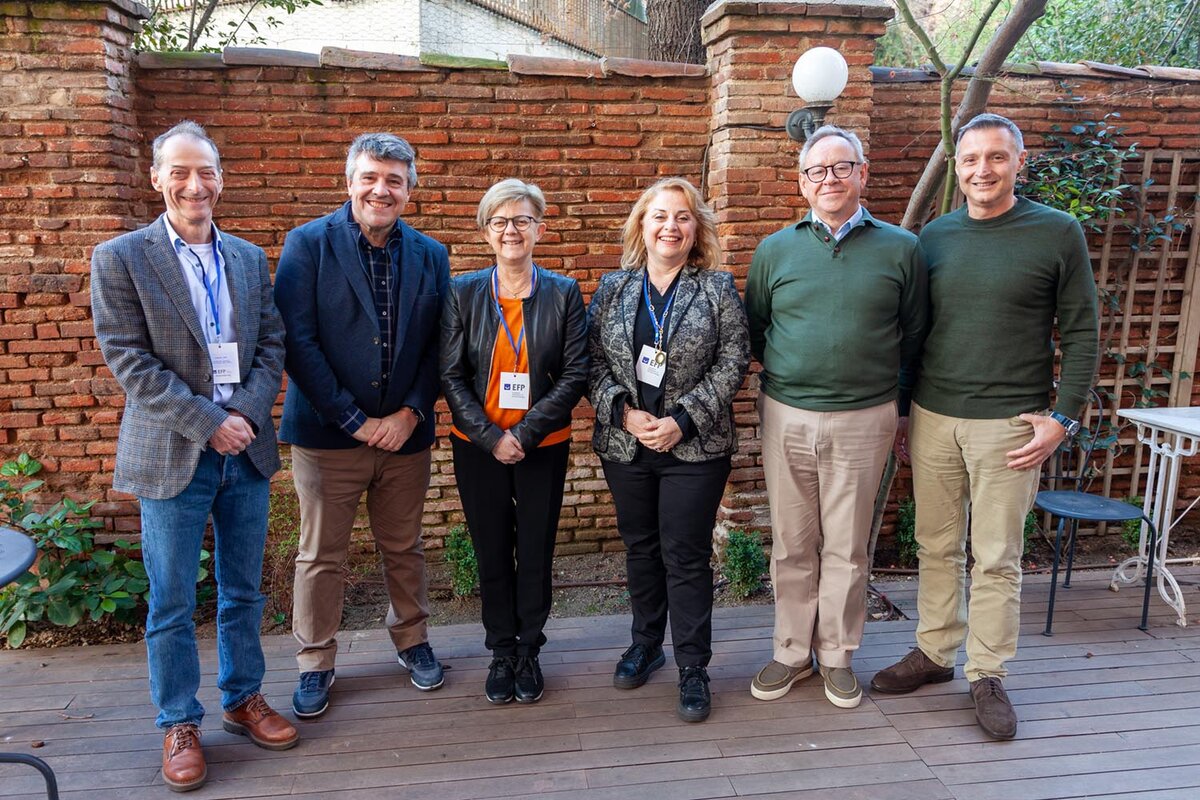
The most recent focused workshop was held in March 2025 with the European Academy of Paediatric Dentistry (EAPD) to explore gingival and periodontal diseases and conditions in children and adolescents (Chapple, Gizani, Sanz, et al., 2026).
The EAPD had previously contacted the EFP requesting information on how the 2018 classification of periodontal and peri-implant diseases and conditions (Caton et al., 2018) and the various EFP clinical-practice guidelines (Herrera, Berglundh, et al., 2023; Herrera et al., 2022; Sanz, Herrera, et al., 2020) can be used in children and adolescents.
The 2018 classification paid very little attention to diseases and conditions in children and adolescents, apart from in the category of periodontitis as a manifestation of systemic diseases. As a result, periodontal diseases in children and adolescents may easily be overlooked because knowledge and experience are scarce or, at least, much more limited compared with the knowledge and awareness about adults.
The EFP thought it was worthwhile compiling the relevant information on the topic and developing guidance for periodontists, for paediatric dentists, for general dentists, and especially for children, adolescents, and their parents or carers. In addition, we also thought that it was important to understand whether the EFP clinical-practice guidelines (CPGs) for the treatment of periodontitis (Herrera et al., 2022; Sanz, Herrera, et al., 2020) were also valid for use in children and adolescents.
This focused workshop therefore aimed to update and understand the epidemiology, aetiology, risk factors, diagnosis, and management of gingival and periodontal diseases and conditions in children and adolescents. As an overarching objective, the workshop wanted to assess if the 2018 classification and the EFP CPGs could also be used in children and adolescents.
The challenges
The first challenge of all focused workshops is working with another society or institution, as there are always important differences between societies. This was the first formal collaboration between the EFP and the EADP, both important organizations in Europe. This collaboration was crucial for at least two reasons: (1) improving periodontal health and attention for children and adolescents, and (2) identifying synergies for achieving the common goal of having recognized dentistry specialities—for periodontology and paediatric dentistry—at the European level. In addition, it should be highlighted that both paediatric dentists and periodontists share a common approach to patient management, always providing continuous and supportive care.
Since 2020, through the European Workshop on Periodontology, the EFP has developed various CPGs: for the treatment of periodontitis in stages I-III (Sanz, Herrera, et al., 2020), for the treatment of periodontitis in stage IV (Herrera et al., 2022), and for the treatment and prevention of peri-implant diseases (Herrera, Berglundh, et al., 2023). We are ready to publish new guidelines later in 2026 on the management of gingivitis, the management of non-biofilm-induced gingival diseases, and the management of acute periodontal conditions. All these (S3 level) guidelines follow very strict protocols of grading the evidence and assessing the relevant factors, together with voting processes that lead to different degrees of consensus.
The focused workshops, in contrast, do not follow these regulations. However, while the focused workshop between the EFP and the EAPD did not develop a formal CPG, it has produced guidance for the various stakeholders involved on the management of periodontal diseases in children in adolescents up to 18 years of age. One challenge for the workshop was to make clear that its consensus report was about providing this guidance and did not constitute a CPG.
Key messages
The key finding from this focused workshop was the evidence that periodontal tissues in children and adolescents differ from those in adults. Therefore, modifications in the management of these conditions at these ages become crucial.
Specific findings can be highlighted for each of the three specific areas covered during the workshop, for which systematic reviews were commissioned and working groups of experts identified to discuss the findings at the workshop.
The first working group focused on periodontal problems in children and adolescents who had different systemic conditions (systematic review: Molina et al., 2026). The second group addressed gingival conditions, with special attention paid to gingivitis induced by dental biofilm and the associated local and systemic factors involved in children and adolescents (systematic review: Tsilingaridis et al., 2026). The third group discussed periodontitis in children and adolescents, which can be very severe and destructive (Eshkol-Yogev et al., 2026).
The main findings in each area can be highlighted as follows:
- Working group 1: In children and adolescents with genetic, congenital, and acquired conditions, an important and a striking finding was that the number of conditions severely affecting periodontal health was much larger than the list presented in the 2018 classification. Seventy conditions were found to impact the health of periodontal tissues, some of them resulting in severe and destructive periodontal conditions.
- Working group 2: In otherwise healthy children and adolescents, dental-biofilm-induced gingivitis is highly prevalent, and it is very important to understand the local and systemic predisposing and modifying factors.
- Working group 3: In otherwise healthy children and adolescents, when focussing on periodontitis, the main issue raised was the challenges of diagnosis, because of the limitations of periodontal probing in the primary and mixed dentition.
In terms of the implications of these findings for everyday clinical practice, the following can be highlighted:
- The most important implication is that increased attention to the periodontal health of children and adolescents is needed because of the high prevalence of some conditions (e.g. dental-biofilm-induced gingivitis), the potential severity (e.g. necrotizing periodontal diseases), and the connection with systemic conditions.
- In addition, specific considerations should be made considering the age and dentition of younger individuals, with unique predisposing and modifying factors impacting diagnosis, prognosis, and management.
The EFP/EAPD focused workshop on gingival and periodontal diseases in children and adolescents was held in Madrid, Spain, in March 2025. The workshop was sponsored by Colgate-Palmolive, one of the EFP’s partners. The consensus report was published in the July 2026 edition of the Journal for Clinical Periodontology.
Bibliography
Caton JG, Armitage G, Berglundh T, Chapple ILC, et al (2018). A new classification scheme for periodontal and peri-implant diseases and conditions. Introduction and key changes from the 1999 classification. Journal of Clinical Periodontology, 45 (Suppl 20), S1-S8. doi:10.1111/jcpe.12935
Chapple I, Gizani S, Sanz M, Declerck D, et al. (2026). Gingival and periodontal diseases and conditions in children and adolescents: consensus report. Journal of Clinical Periodontology, 52. doi:10.1111/jcpe.70033
Chapple I, Gizani S, Sanz M, Declerck D, et al. (2026). Gingival and periodontal diseases and conditions in children and adolescents: consensus report. Eur Arch Paediatr Dent, 27(3), 637-670. doi:10.1007/s40368-025-01154-y
Eshkol-Yogev I, Ambrosio N, Somani C, et al. (2026). Periodontitis and Periodontal Conditions in Systemically Healthy Children and Adolescents. Journal of Clinical Periodontology, 53(7), 1100-1198. doi:10.1111/jcpe.14199
Herrera D, Berglundh T, Schwarz F., et al. (2023). Prevention and treatment of peri-implant diseases: The EFP S3 level clinical practice guideline. Journal of Clinical Periodontology, 50 Suppl 26, 4-76. doi:10.1111/jcpe.13823
Herrera D, Sanz M, Kebschull M, et al. (2022). Treatment of stage IV periodontitis: The EFP S3 level clinical practice guideline. Journal of Clinical Periodontology, 49 Suppl 24, 4-71. doi:10.1111/jcpe.13639
Molina A, Meyle J, Ram D, et al (2026). Periodontal Diseases and Conditions in Children and Adolescents Associated With Systemic Disorders: A Systematic Review. Journal of Clinical Periodontology, 53(7), 1199-1225. doi:10.1111/jcpe.70109
Sanz M, Herrera D, Kebschull M, et al. (2020). Treatment of Stage I-III Periodontitis:The EFP S3 Level Clinical Practice Guideline. Journal of Clinical Periodontology, 47, 4-60. doi:10.1111/jcpe.13290
Tsilingaridis G, Tewari N, Seremidi K, et al. (2026). Dental Biofilm-Induced Gingivitis in Children and Adolescents Without Known Systemic Involvement: A Systematic Review. Journal of Clinical Periodontology, 53(7), 1226-1252. doi:10.1111/jcpe.70122
Biography

David Herrera is Dean of the Faculty of Odontology and Professor and Chair of Periodontology at the Complutense University of Madrid (UCM), Madrid, Spain, where he is also co-director of the EFP-accredited postgraduate programme in Periodontology and co-director of the ETEP (Etiology and Therapy of Periodontal and Peri-implant Diseases) Research Group (UCM). He was chair of the EFP’s workshop committee (2020-2026) and a former president of SEPA (2013-2016).
EFP partners









Sign up to our newsletter
The EFP publishes a free monthly email newsletter with the latest news about the federation's activities, its publications, and its campaigns.
